

CONFERENCE: European Association of Urban History (EAUH) Conference
With its focus on cities and the networked urban world, the Seventeenth EAUH Conference aims to foster cross-disciplinary approaches between history, geography, urbanism, architecture, heritage, museum studies, and other human and environmental sciences, all of which are critical sources of knowledge for the preservation of contemporary democratic culture.
There are three types of sessions, as is usual at EAUH conferences: main sessions, specialist sessions and roundtables, with an initial total of 100 accepted sessions for the EAUH Barcelona Conference 2026. Regardless of their type, all sessions will be organised together in approximately twenty clusters defined to foster the interests, contacts and choices of the attendees.
The conference will start on Wednesday in the afternoon with two slots for sessions, before the opening ceremony with keynotes and a reception. On Thursday there will be some visits after the working sessions, and the conference dinner for all will be on Friday evening. Saturday’s programme is an important part of the Conference, with workshops, specialised visits and urban trekkings directly linked to the sessions, and with the participation of local associations for history, heritage and urban planning.
The central theme for the seventeenth conference of the European Association for Urban History (EAUH) is ‘City Networks in Europe and Beyond’. City networks have played a strategically important role in both the past and the present. Cities and the connections between them have been just as influential—if not more so—than states in shaping Europe and extending its influence beyond the continent, especially through colonial relationships. Although the history of Europe is often identified with states and nations, it is largely the history of its networked cities.
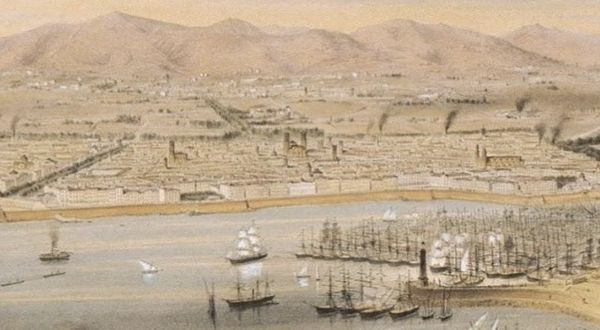
This is clearly evident in Barcelona, a major medieval center in the Mediterranean, which also led the great leap forward of the industrial age, with crucial links to other cities, from Mediterranean and Atlantic Europe to the Hispanic colonies. And with a dense urbanistic, socioeconomic, political and cultural trajectory as a node in Contemporary European history. Since the 18th century, Barcelona has maintained a long historiographical tradition of studies about the city, considered as a substantial historical subject in itself. In this tradition, the municipal archive and the city museum have played a prominent role, along with historical research in universities and institutions dedicated to urban studies.
DATES: 2-5 September 2026. Conference registration starts on Monday, 2 February 2026.
LOCATION: Barcelona, the capital of Catalonia (exact location to be announced).