


- OVERVIEW
- TIMELINE
- BIBLIOGRAPHY
The House of Osman, from the Qayi clan of Oghuz Turks, had the most humble and inconspicuous origins. They would, however, establish one of the greatest empires in history: the Devlet-i ʿAliyye-i Osmaniyye, or the Sublime State of the Ottomans (1299-1922). According to the Ottoman genesis legend, the Sultan of the Seljuks, another Turkish empire from Oghuz stock, granted Osman I’s father Ertuğrul Ghazi (d.1280) a small town in western Anatolia. In return, Ertuğrul and his tribe provided military support to defend the Seljuk border. In his letter of grant the Sultan made a subtle hint that this tiny beylik (emirate) would evolve into something much greater; “the beginning of a bountiful rain is a tiny drop before it pours down”. It did pour and turn to an ocean; an empire that at its zenith in the seventeenth century ruled over two million square miles of land, stretching over North Africa, Egypt, south-eastern and central Europe, western Asia, and the Arabian Gulf.
However, the path to greatness had certainly not been smooth. Following the marital and military alliances with the Byzantine Empire and other Turkish emirates, the budding Ottoman emirate started to grow into a full-blown sultanate, which alarmed the Christian kings of Europe. In less than a century, leading up to the conquest of Constantinople, the Ottomans fought and won against five Crusades, yet suffered a catastrophic defeat from a Mongol invasion. Only when Sultan Mehmed II (r. 1451-1481) took the capital of the Byzantine Empire in 1453 did the Ottomans secure relative stability and European nations acknowledged that the Turks were here to stay.
After conquering the Hijaz from the Mamluks and establishing themselves as the custodians of the Islamic holy sites of Makka and Madina, the Ottoman Empire declared itself as the overarching Sunni Muslim authority in the world. Ottoman efforts to take Vienna were exhausted by the Hapsburgs as Turks expanded their territories both northwards and westwards beyond the Danube, and eastwards where they found their expansion frustrated by the Shia empire of the Iranian Safavids.
The Christian nations of Europe, despite experiencing occasional victories over the Ottomans, such as in Malta in 1565 and Lepanto in 1571, lived in a state of near perpetual fear of this Muslim power and its dynamic expansionism. This fear was matched by marvel, as Europeans devoured travelogues, plays and histories about the Ottomans. This consumption also took on a more literal form as currants, sugar, spices, and coffee from Ottoman territories found their way across Europe and became staples of English cuisine. Moreover, ‘Turkish’ modes of dress became fashionable in the Tudor and Stuart courts.
Most controversially, the religious realities of Ottoman life were of interest to Christians in Europe. Early modern travellers to the Ottoman Empire were struck by how Muslims and Christians shared material culture, had occasional intermarriages and more informal liaisons, and enjoyed close living and working relationships in cosmopolitan Ottoman cities. For many Europeans coming from the world of cuius regio, eius religio, the peaceful coexistence of many different religions and ethnic communities in Ottoman lands challenged them religiously and intellectually. The Christian Europeans, on the other hand, did not have the same novelty value for the Ottomans as the latter possessed a first-hand knowledge of the former both doctrinally, through chapters on the Christian faith in the Qur’an, and practically, through their daily lives.
The English government did not enter into diplomatic relations with the Sublime Porte until 130 years after the fall of Constantinople. Queen Elizabeth I (r. 1558-1603) was the first British monarch to initiate diplomatic efforts. After her excommunication from the Catholic Church by Pope Pius in 1570, ostracised from a largely Catholic Europe and beset by attacks from belligerent Spain, it was imperative for Elizabeth to look further afield for both military alliances and trade agreements. She struck up an epistolary relationship both with Sultan Murad III (r. 1574-1595) and his wife Safiye (c. 1550-1619), the first time an English monarch exchanged letters with the powerful women of the haram.
During Elizabeth’s reign William Harborne (1542-1617), the first English ambassador to the Ottoman Empire, took up residence in Turkey. It would be in 1578 that Harborne, a well-connected London merchant, travelled to Istanbul on a mission to obtain a trade licence from the Sultan to have unmediated access to the Mediterranean market. His unexpected success propelled Elizabeth to seek out capitulations and appoint him as the first ambassador. Although the Ottomans did not open a permanent embassy in London in return, the Sultan immediately sent an envoy, or rather spy, to London to learn about England, of which he knew little, as it was both distant and small in size and international standing.
Diplomatic links between the English monarchy and the Sublime Porte waned after the accession of James I (r. 1603-1625) in 1603, who refused to associate with the ‘heretic’ Turks. However, the Ottoman Empire loomed large in the English imagination more than ever before, as Barbary corsairs in the Mediterranean and raids on English coastal villages and towns led to the kidnap of thousands of Englishmen, and some English women. The captives would customarily be ransomed by their families, which was one of the sources of revenue in the piracy economy. Alternatively, they would be exchanged with Muslims taken captive by the former’s country, which required diplomatic correspondence and bureaucratic intervention. Petitions pleading for the ransom of captured Englishmen were commonplace during the reign of King Charles I (r. 1625-1649), and his failure to respond effectively added to the growing discontent over his kingship.
The English Civil War (1642-1652) saw a breakdown in print censorship and an explosion of publications of heterodox and heretical religious material. The Qur’an in English, entitled The Alcoran of Mahomet and attributed to Alexander Ross, was printed for the first time in 1649, shortly after the execution of Charles I. It both intrigued and appalled the English, many of whom took its publication to be a sign of the spiritual degradation of the English nation in the religious confusion of the period. Despite the fact that it was a poor translation of the French version, which appeared on the continent in 1647, it did for the first time provide some indication as to how Islam was understood by its adherents, allowing Islam to speak for itself. The interest in the religious world of the Ottomans was further evidenced by the founding of chairs in Arabic in Oxford in 1636 and Cambridge in 1645, where books gleaned from the Ottoman Empire were used as texts for undergraduates.
The Ottomans failed in their attempted siege of Vienna in 1683 and the Holy League retaliated by reclaiming Hungary and parts of the Balkans. This, and the defeat of the Ottomans in the Austro-Ottoman War of 1683-1697, suggested the hitherto inconceivable – that the Ottomans were by no means invincible, and that the empire appeared to be shrinking rather than expanding. The religious life of England had changed forever by the end of the seventeenth century too. Post-Restoration, wars and disputes over religion had given way to a more secular, less religiously charged atmosphere, as evidenced in the shifting preoccupations of published titles in the period. The eighteenth century saw less interest in religious polemic about Islam and the nascence of a desire for fabulous tales and poetry from Ottoman lands.
The Ottoman Regencies
The peripheral regions of the Ottoman Empire were often afforded greater autonomy, either as vassal states where authority was shared with local governments on the payment of tribute, or, as in the case of the Ottoman Regencies of the Maghreb, as increasingly self-governed provinces where expatriated Ottomans collaborated with local powers to govern themselves under Ottoman suzerainty. In both cases, the Ottoman central government expected loyalty in wartime and the provision of soldiers and ships when needed and promised the same in return. However, the Regencies increasingly took control of their own foreign policy, military engagements and economic relations.
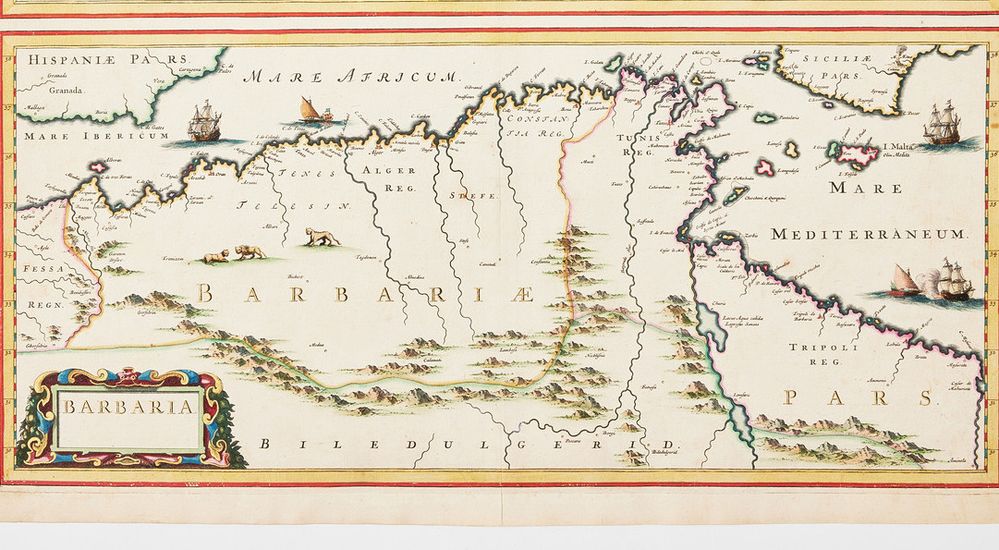
Ottoman rule in the Maghreb began to emerge in 1516, when Albanian-born privateer brothers Oruç Reis and Hayreddin Barbarossa moved their base of operations from independent Hafsid Tunis to Algiers. Capturing key strategic outposts from the expansionist Spanish Hapsburgs, Oruç and Hayreddin were successively awarded nominal Ottoman governorship and military assistance until 1532, when Algiers was formally incorporated into the empire and Barbarossa instituted as the province’s first governor (Beylerbey). His corsair fleet conquered Tunis in 1534, but it was quickly retaken by the Hapsburgs, changing hands twice more until finally joining the Ottoman Empire in 1574. The Knights Hospitallers, who had relocated after the Ottoman conquest of Rhodes in 1522, were driven out of Tripoli by Ottoman forces in 1551.
Ottoman ambitions turned further west as they consolidated rule over the Maghreb in the late 16th century but increasing Moroccan assertiveness and diverting conflicts in the Eastern Mediterranean and Europe cemented Algiers as the westernmost Ottoman province. Gradually across the seventeenth century, Algiers, Tunis and Tripoli increased their autonomy within the Ottoman Empire, culminating in the founding of the Husaynid Dynasty in Tunis in 1705 and the Karamanli dynasty in Tripoli in 1711, both of which commanded the regions under nominal Ottoman rule beyond the close of the early modern era.
From the beginning of Ottoman rule, Regency relations with England were hostile, dominated by privateering, captivity and the spectre of forced conversion to Islam. While Elizabeth I enjoyed friendly relations with Mulay Aḥmad al-Manṣur of Morocco (r. 1578-1603), no such engagements appeared with the Regencies. In the early 17th century, stories from travellers such as William Lithgow and captives like John Rawlins and Francis Knight mixed in the popular consciousness with violent plays like William Shakespeare’s Othello, Robert Daborne’s A Christian Turn’d Turke and Phillip Massinger’s The Renegado. English sailors increasingly fell prey to stronger, faster Regency ships in the Mediterranean.
Meanwhile, Algerians ventured northwards, working with corsairs from Moroccan Salé to capture the English isle of Lundy in 1627 and carry away over 100 villagers from Irish Baltimore in 1631. Public pressure mounted from petitioners, many of them women, to address the problem of piracy. This led to the English bombardment of Algiers in 1620 and Salé in 1637, and contributed to Charles I’s fateful decision to levy ship money and, by extension, to his unseating in the Wars of the Three Kingdoms. Yet simultaneously, while the Levant Company failed to establish firm trading roots in the Regencies, many individual English people went freely to the Regencies in search of advancement, fortune or freedom from Christian social norms, often going as far as to convert to Islam and captain fleets or serve in armies against their former countrymen.
Rising English naval, diplomatic and economic power in the Mediterranean in the later Interregnum and Restoration periods saw relations between England and the Regencies improve, with treaties being negotiated in all three regions in 1658-64. Through newspaper reporting, the influence of a growing group of resident consuls and merchants, and increasingly detailed captivity narratives, the Maghreb became far less alien and terrifying. However, until the final war with Algiers was concluded in 1684, the threat of maritime combat, enslavement and forced conversion did not abate. The early 18th century and England’s conquest of Gibraltar and Minorca saw the decline of Moor and Turk plays, while still-popular captivity narratives and newspaper accounts were joined by scientific investigations and popular histories. Trade with the Regencies, particularly in wheat and other foodstuffs, proved vital in supplying English military forces in the War of Spanish Succession, but the Barbary corsairs, once so famous, gradually faded from English consciousness.
Curated by Samera Hassan and Lubaaba Al-Azami
Written by Samera Hassan, Munire Maksudoglu and Nat Cutter
Osman I (r. 1299-1323/4)
1299 The Ottoman Empire is founded by Osman I (d. 1323/4), who has a vision in a dream of an empire spanning three continents.
Orhan (r. 1323/4-1362)
Murad I (r. 1362-1389)
Beyezid I (r. 1389-1402)
1400 The Byzantine Emperor Manuel Palaeologus (r. 1391-1425) visits London to seek help against the advance of the Turks.
Mehmed II (r. 1444-1446, 1451-1481)
1453 The young Mehmed II (1432-1481) conquers Constantinople, the capital of the Byzantine Empire. His military prowess causes the Balkans and Southern Europe to become Ottoman dominions in less than thirty years.
Bayezid II (r. 1481-1512)
1492 The Spanish Inquisition established by the new Spanish Monarchy expels the Jewish and Muslim populations in Spain. Sultan Bayezid II (c.1360-1403) sends out the Ottoman navy to evacuate them safely to Ottoman lands.
1501 Ottomans carry out military campaigns in the Morea and establish their control over the Peloponnese, which will secure their naval power in the Eastern Mediterranean.
Selim I (r. 1512-1520)
1514 Selim I (1470-1520) defeats Safavid Shah Ismail (r. 1501-1524) in the Battle of Chaldiran, which leads to the Ottoman annexation of Eastern Anatolia and Northern Iraq.
1516-17 Selim I conquers the Mamluk Sultanate of Egypt after defeating them in the Battle of Marj Dabiq near Aleppo, which leads to the Ottoman annexation of Syria, Palestine, Egypt and the Arabian Peninsula.
1516-74 Ottomans gradually establish rule in Algiers, Tunis and Tripoli, in conflict with the Spanish Hapsburgs.
Suleiman the Magnificent (r. 1520-1566)
1521 Suleiman I (1494-1566) takes Belgrade, a major Christian stronghold, laying the way open to the Ottoman conquest of Hungary and Austria.
1522 Ottomans take Rhodes.
1526 In the Battle of Mohacs Suleiman I defeats Louis II of Hungary (r. 1516-1526) making the Ottoman Empire the preeminent power in Central Europe.
1553 Anthony Jenkinson (1529-1610/1611), a Muscovy Company merchant attending Suleiman’s entrance to Aleppo with his army, succeeds in procuring a letter from him granting permission to trade throughout the Turkish dominions.
1558 Elizabeth I (r.1558-1603) becomes Queen of England.
Selim II (r. 1566-1574)
1570 Elizabeth I is formally excommunicated by Pope Pius V, forcing her to look further afield to forge new alliances against her European enemies.
1571 Ottomans take Cyprus. To avenge it, a fleet of the Holy League, a coalition of European Catholic states arranged by Pope Pius V, inflicts a major defeat on the Ottoman fleet at the Battle of Lepanto in the Gulf of Patras.
Murad III (r. 1574-1595)
1578 William Harborne (1542-1617) becomes the first English ambassador to the Ottoman Empire, employed as an agent both of the state and of the Levant Company. The subsequent privileges of trade he secures for England form the basis of Anglo-Ottoman trade agreements for the next 300 years.
1578 Elizabeth I establishes correspondence with Murad III (1546-1595) and with his wife, Sultana Safiye (c.1550-1619).
1580 Francis Drake, who is commissioned by Elizabeth I to lead an expedition against the Spanish colonies on the American Pacific coast, returns home with slaves among whom there are 100 Ottoman subjects. Elizabeth returns them to Istanbul in an effort to earn Murad’s favour.
1581 The Turkey Company, which would be merged with the Venice Company to form the Levant Company ten years later, is established. It mainly exports tin, lead and wool cloth to the Ottoman dominions and imports currants, spices, silk, and cotton.
1586 Meredith Hanmer preaches a sermon on the occasion of the baptism of a Turk in the Hospital of St. Catherine in London, in which he mentions the royal correspondence between the Ottoman and English courts. In the same year the English Ambassador, William Harborne, writes to Samson Rowlie, son of an English merchant from Bristol who has become Muslim and treasurer to the Ottoman governor of Algiers, for his help in the release of Christian captives.
1587 Christopher Marlowe’s Tamburlaine about the great battle between two Turks, Timur (r. 1370-1405) and Bayezid I (r. 1389-1402), is first performed on the London stage. Its huge success leads to a sequel and, in the ensuing decades, other dramatists to produce a great number of history plays as well as romances based on the lives of Turkish sultans.
1588 The Spanish Armada is defeated.
1588 Edward Barton (1562/3-1598) succeeds William Harborne as ambassador to the Ottoman Empire, participating in battle alongside the Ottoman armies against Hungary in 1596. He is a well-liked figure in the Ottoman court for his fluency in Turkish.
1589 In an attempt to promote Anglo-Ottoman relations, Richard Hakluyt publishes some of the letters between Murad III and Elizabeth I in his famed The Principall Navigations, Voiages, Traffiques and Discoueries of the English Nation.
Mehmed III (r. 1595-1603)
1598 English ambassador Edward Barton dies of a plague that swept through Istanbul killing many in the palace including eleven princesses. Barton is given a state funeral by Sultan Mehmed III (1556-1603).
Ahmed I (r. 1603-1617)
1603 Elizabeth I dies and is succeeded by James I (r.1603-1625). He signs a peace treaty with Spain in 1603 and attempts to distance himself politically from the Ottomans.
1603 Richard Knolles (c.1445-1610) publishes A Generall Historie of the Turkes, a synthesis of travel narratives, letters and histories providing an overview of the Ottoman Empire. The work proves hugely popular and is frequently reprinted.
1606 The Long Turkish War during which the Ottomans captured various Hungarian strongholds is concluded with the Peace of Zsitvatorok, marking the end of Ottoman growth in Europe.
1612 Publication of Robert Daborne’s play, A Christian Turn’d Turk. It is based on the life of Jack Ward (1553-1622), an English pirate who converted to Islam, moved to Tunis and was reported to be living a life of luxury as a renegado.
Mustafa I (r. 1617-1618, 1622-1623)
Osman II (r. 1618-1622)
1620 English forces under Admiral Arthur Herbert bombard Algiers in retaliation for rising corsair attacks.
1622 Following a humiliating defeat in Poland, Osman II (1604-1622) is toppled in a coup and subsequently strangled.
Murad IV (r. 1623-1640)
1625-31 James I dies and is succeeded by Charles I (r.1625-1649) who continues his father’s policy of political froideur towards the Ottoman Empire. His reign is dogged by corsairs from Algiers and Morroco who rove the Bristol Channel, English Channel and Irish sea, frequently kidnapping English men and women. The Levant Company withdraws their assets from the Maghreb.
1635 Archbishop Laud (1573-1645) produces A Form of Penance and Reconciliation of a Renegado, a ritual designed to reinstate returned English men from Muslim lands who had converted to Islam back into the Church of England.
1640 Francis Knight publishes A Relation of Seven Years Slaverie Under The Turkes of Argeire, the first captivity narrative to include a contemporary description of the Ottoman regencies.
Ibrahim (r. 1640-1648)
1642-1651 The English Civil War sees Royalists and Parliamentarians pitted against each other over disputes regarding taxation, sovereignty and religion.
Mehmed IV (r. 1648-1687)
1649 Charles I is executed by Parliamentary forces. England becomes a Commonwealth headed by Oliver Cromwell (1588-1658). Meanwhile Charles, the exiled Prince of Wales (1630-1685), attempts to win financial support from Sultan Mehmed IV (r. 1648-1687) to launch an attack on Parliamentary forces and reclaim the throne. The attempt is unsuccessful.
1649 The first printed Qur’an in English, The Alcoran of Mahomet, is published, provoking uproar in English society and highlighting the waning power of censorship in the turmoil of the English Civil War.
1650 The first coffee house in England is opened by a Jewish man named Jacob in Oxford. Coffee is regarded as an Ottoman drink, and coffee houses offer new spaces for men to socialise, make business transactions and debate.
1657 The English Quaker, Mary Fisher, moved to preach to the Ottoman ruler, travels to Adrianople and is presented to Sultan Mehmed IV (1642-1693). Accounts relate that he listens to her respectfully and agrees with her on many points in religion.
1658-64 England establishes unprecedentedly stable peace treaties with Algiers, Tunis and Tripoli, planting official resident consuls and small merchant houses in regency ports.
1660 The English monarchy is reinstated with Charles II (r.1660-1685). He refuses to wear the popular French style of clothing associated with excess and frivolity, and instead adopts a more sober ‘Persian vest’, seen as a pre-cursor to the three-piece suit.
1665 The Oxford/London Gazette is launched, providing consistent, reliable and up-to-date reporting on Europe and the Ottoman Empire to English readers.
1675 William Okeley publishes Eben-Ezer; or, A Small Monument of Great Mercy, offering a theologised account of Algerian captivity.
1675 Charles II orders the closure of all London coffee houses, which are fast gaining a reputation as hotbeds of sedition.
1683 The Ottomans are decisively defeated at Vienna after a failed siege, and the Holy League retaliates by reclaiming territory in the Balkans and Hungary.
1684 The last war between England and Algiers concludes in a peace treaty and exchange of prisoners.
1685 James II (r. 16385-1688), brother of Charles II, succeeds to the throne. His Catholicism and connections with France prompt many in Parliament to plan his replacement by a Protestant alternative.
Suleiman II (r. 1687-1691)
1686-87 Algerian admiral Canari Reis visits England and the Duke of Grafton, Charles II’s illegitimate son, visits Algiers, Tunis and Tripoli.
1690 Ottomans recapture Belgrade, an important stronghold.
1688 James II is removed from the throne and replaced by his daughter Mary II (r. 1689-1684) and her husband William III, Prince of Orange (r. 1689-1702). A second edition of the Alcoran is published in England.
Ahmed II (r. 1691-1695)
1691 Ottomans lose the Battle of Slankamen against the Holy League, which leads to the fall of Varad in Romania and of Gyula in Hungary.
Mustafa II (r. 1695-1703)
1699 William III helps mediate a treaty between the Ottomans and the Habsburg Empire, known as the Treaty of Karlowitz, ending the 13-year war between them and cementing the Habsburgs as the major power of Southern and Eastern Europe.
1704 Joseph Pitts publishes A True and Faithful Account of the Religion and Manners of the Mahometans, presenting from the perspective of an escaped captive and convert England’s earliest first-hand account of the pilgrimage to Mecca.
1716 Lord Edward Wortley-Montagu (1678-1761) is appointed Ambassador to the Ottoman Empire, and is accompanied by his wife, Lady Mary Wortley-Montagu (1689-1762). She socialises with Ottoman ladies and is able to give an unprecedented amount of accuracy in her account of Ottoman female lives and customs in her Turkish Embassy Letters.
by Samera Hassan, Munire Maksudoglu and Nat Cutter
Barbour, Richmond. Before Orientalism: London's Theatre of the East 1576-1626. Cambridge: Cambridge University Press, 2003.
Barkey, Karen. Empire of Difference: the Ottomans in Comparative Perspective. Cambridge : Cambridge University Press, 2008.
Birchwood, Matthew. Staging Islam in England: Drama and Culture, 1640-1685. Woodbridge: D. S. Brewer, 2007.
Birchwood, Matthew & Dimmock, Matthew ed. Cultural Encounters between East and West: 1453-1699. Newcastle-upon-Tyne: Cambridge Scholars Press, 2005.
Brotton, Jerry. This Orient Isle: Elizabethan England and the Islamic World. London: Allen Lane, 2016.
Brotton, Jerry. The Sultan and the Queen: The Untold Story of Elizabeth and Islam. New York: Viking, 2016.
Bulman, William J. Anglican Enlightenment: Orientalism, Religion and Politics in England and its Empire, 1648-1715. Cambridge: Cambridge University Press, 2015.
Champion, J.A.I. The Pillars of Priestcraft Shaken: The Church of England and its Enemies, 1660-1730. Cambridge: Cambridge University Press, 1992.
Dimmock, Matthew. New Turkes: Dramatizing Islam and the Ottomans in Early Modern England. Oxford: Routledge, 2005.
Directorate of State Archives Ottoman Archives. Web. https://katalog.devletarsivleri.gov.tr/
Finkel, Caroline. Osman’s Dream: the Story of the Ottoman Empire 1300-1923. London: John Murray, 2005.
Kocabaşoğlu, Uygur. Majestelerinin Konsolosları: İngiliz Belgeleriyle Osmanlı İmparatorluğu’ndaki İngiliz Konsoloslukları (1580-1900). [The Consuls of her/his Majesty: English Consulates in the Ottoman Empire according to English Records (1580-1900).] İstanbul: İletişim Yayınları, 2004.
Kugler, Emily M.N. Sway of the Ottoman Empire on English Identity in the Long Eighteenth Century. Leiden: Brill, 2012.
Kurat, Akdes Nimet. Türk-İngiliz Münasebetlerine Kısa bir Bakış (1553-1952). [A Short View of Anglo-Turkish Relations (1553-1952).] Ankara: DTCF, 1952.
Kütükoğlu, Mübahat S. Balta Limanı’na Giden Yol: Osmanlı – İngiliz İktisadi Münasebetleri (1580-1850). [The Way to the Convention of Commerce of Balta Liman: Anglo-Ottoman Economic Relations (1580-1850).] Ankara: TTK, 2013.
İnalcık, Halil. The Ottoman Empire: The Classical Age, 1300-1600. London: Phoenix, 2013.
MacLean, Gerald; Matar, Nabil. Britain and the Islamic World 1558-1713. Oxford: Oxford University Press, 2011.
Maclean, Gerald. Looking East: English Writing and the Ottoman Empire before 1800. Basingstoke: Palgrave Macmillan, 2007.
Maclean, Gerald ed. Re-orienting the Renaissance: cultural exchanges with the East. New York; Basingstoke: Palgrave Macmillan, 2005.
MacLean, Gerald. The Rise of Oriental Travel: English Visitors to the Ottoman Empire, 1580-1720. Basingstoke: Palgrave Macmillan. 2004.
Matar, Nabil. British Captives from the Mediterranean to the Atlantic, 1663-1760. Leiden: Brill, 2014.
Matar, Nabil ed. Henry Stubbe and the Beginnings of Islam: The Originall & Progress of Mahometanism. New York: Columbia University Press, 2014.
Matar, Nabil. Europe Through Arab Eyes, 1578-1727. New York: Columbia University Press, 2009.
Matar, Nabil. Britain and Barbary, 1589-1689. Gainesville: University Press of Florida, 2005.
Matar, Nabil. Turks, Moors, and Englishmen in the Age of Discovery. New York: Columbia University Press, 1999.
Matar, Nabil. Islam in Britain 1558-1685. Cambridge: Cambridge University Press, 1998.
Ockley, Simon. The Conquest of Syria, Persia, and Egypt by the Saracens (London), 1708-1718.
Pennell, C.R. ed., Piracy and Diplomacy in Seventeenth-Century North Africa: The Journal of Thomas Baker, English Consul in Tripoli, 1677-1685. London: Associated University Presses, 1989.
Russell, G.A. ed. The ‘Arabick’ Interest of the Natural Philosophers in Seventeenth-Century England. Leiden: Brill, 1994.
Talbot, Michael. British-Ottoman Relations, 1661-1807: Commerce and Diplomatic Practice in Eighteenth-Century Istanbul. Woodbridge: The Boydell Press, 2017.
Türk-İngiliz İlişkileri:1583-1984: (400. Yıldönümü). [Anglo-Turkish Relations: 1583-1984 (400th Anniversary).] Ankara: Başbakanlık Basın Yayın ve Enformasyon Genel Müdürlüğü, 1985.
Vitkus, Daniel. Piracy, Slavery and Redemption: Barbary Captivity Narratives from Early Modern England. New York: Columbia University Press, 2001.
White, Joshua M. Piracy and Law in the Ottoman Mediterranean. Stanford: Stanford University Press, 2018.
Introductory Pre-Modern Race Theory
Compiled by Hassana Moosa
Akhimie, Patricia. Shakespeare and the Cultivation of Difference: Race and Conduct in the Early Modern World. New York: Routledge, 2018.
Archer, John M. Old Worlds: Egypt, Southwest Asia, India, and Russia in Early Modern English Writing. California: Stanford University Press, 2001.
Arvas, Abdulhamit. "Early Modern Eunuchs and the Transing of Gender and Race." Journal for Early Modern Cultural Studies 19.4 (2019): 116-136.
Ballaster, Ros. Fabulous Orients: Fictions of the East in England 1662–1785. Oxford: Oxford University Press, 2005.
Bartels, Emily C. Speaking of the Moor: From" Alcazar" to" Othello". Philadelphia: University of Pennsylvania Press, 2008.
Barthelemy, Anthony G. Black face, maligned race: the representation of blacks in English drama from Shakespeare to Southerne. Louisiana: LSU Press, 1987.
Bovilsky, Lara. Barbarous Play: Race on the English Renaissance Stage. Minneapolis: University of Minnesota Press, 2008.
Britton, Dennis A. Becoming Christian: Race, Reformation, and Early Modern English Romance. New York: Fordham University Press, 2014.
Burton, Jonathan. Traffic and Turning: Islam and English Drama, 1579-1624. Delaware: University of Delaware Press, 2005.
Chakravarty, Urvashi. "More Than Kin, Less Than Kind: Similitude, Strangeness, and Early Modern English Homonationalisms." Shakespeare Quarterly 67.1 (2016): 14-29.
Corredera, Vanessa. "“Not a Moor exactly”: Shakespeare, Serial, and Modern Constructions of Race." Shakespeare Quarterly 67.1 (2016): 30-50.
d'Amico, Jack. The Moor in English Renaissance Drama. Florida: University of Florida Press, 1991.
Dadabhoy, Ambereen. "The Moor of America: Approaching the Crisis of Race and Religion in the Renaissance and the Twenty-First Century." Teaching Medieval and Early Modern Cross-Cultural Encounters. Palgrave Macmillan, New York, 2014. 123-140.
Degenhardt, Jane H. Islamic Conversion and Christian Resistance on the Early Modern Stage. Edinburgh: Edinburgh University Press, 2010.
Erickson, Peter, and Clark Hulse, eds. Early modern visual culture: Representation, race, and empire in Renaissance England. Philadelphia: University of Pennsylvania Press, 2000.
Erickson, Peter, and Kim F. Hall. "A New Scholarly Song”: Rereading Early Modern Race." Shakespeare Quarterly 67.1 (2016): 1-13.
Erickson, Peter. "Invisibility speaks: Servants and portraits in early modern visual culture." Journal for Early Modern Cultural Studies 9.1 (2009): 23-61.
Espinosa, Ruben and David Ruiter eds. Shakespeare and Immigration. New York: Routledge, 2016.
Fuchs, Barbara. "The Spanish Race" in Rereading the Black Legend: the discourses of religious and racial difference in the Renaissance empires eds. Margaret R. Greer, Walter D. Mignolo, & M.Quilligan.Chicago: University of Chicago Press, 2007.
Feerick, Jean E. Strangers in Blood: Relocating Race in the Renaissance. Toronto: University of Toronto Press, 2010.
Floyd-Wilson, Mary. English ethnicity and race in early modern drama. Cambridge: Cambridge University Press, 2003.
Gillen, Katherine. Chaste Value: Economic Crisis, Female Chastity and the Production of Social Difference on Shakespeare's Stage. Edinburgh: Edinburgh University Press, 2017.
Habib, Imtiaz. Black Lives in the English Archives, 1500-1677: Imprints of the Invisible. Vermont: Ashgate, 2008.
Habib, Imtiaz. Shakespeare and race: Postcolonial praxis in the early modern period. Maryland: University Press of America, 2000.
Hall, Kim F. Things of darkness: Economies of race and gender in early modern England. New York: Cornell University Press, 1995.
Hendricks, Margo, and Patricia Parker eds. Women,'Race' and Writing in the Early Modern Period. London: Routledge, 1994.
Heng, Geraldine. The invention of race in the European Middle Ages. Cambridge: Cambridge University Press, 2018.
Iyengar, Sujata. Shades of difference: Mythologies of skin color in Early Modern England. Philadelphia: University of Pennsylvania Press, 2005.
Jones, Eldred D. Othello's Countrymen: The African in English Renaissance Drama. Published on behalf of Fourah Bay College, the University College of Sierra Leone [by] Oxford University Press, 1965.
Jones, Eldred D. The Elizabethan Image of Africa. Charlottesville: University of Virginia Press, 1971.
Kaplan, Paul HD. "Black Turks: Venetian Artists and Perceptions of Ottoman Ethnicity.’’ in The Turk and Islam in the Western Eye, 1450–1750: Visual Imagery before Orientalism ed. James G. Harper. Farnham: Ashgate, 2011.
Little, Arthur L. Shakespeare Jungle Fever: National-Imperial Re-Visions of Race, Rape, and Sacrifice. California: Stanford University Press, 2000.
Loomba, Ania. Gender, race, renaissance drama. Manchester and New York: Manchester University Press, 1989.
Loomba, Ania, and Jonathan Burton, eds. Race in Early Modern England: A Documentary Companion. Basingstoke: Palgrave Macmillan, 2007.
MacDonald, Joyce G. Women and race in early modern texts. Cambridge: Cambridge University Press, 2002.
Pierce, Leslie. “An Imperial Caste: Inverted Racialization in the Architecture of Ottoman Sovereignty” in Rereading the Black Legend: The Discourses of Racism in the Renaissance Empires eds. Margaret R. Greer, Walter D. Mignolo, & M.Quilligan. Chicago: University of Chicago Press, 2007.
Robinson, Benedict. Islam and Early Modern English Literature: The Politics of Romance from Spenser to Milton. Basingstoke: Palgrave Macmillan, 2007.
Shahani, Gitanjali G. Tasting Difference: Food, Race, and Cultural Encounters in Early Modern Literature. New York: Cornell University Press, 2020.
Singh, Jyotsna G. Colonial narratives/cultural dialogues:" discoveries" of India in the language of colonialism. New York: Routledge, 1996.
Smith, Ian. Race and Rhetoric in the Renaissance: Barbarian Errors. New York: Palgrave Macmillan, 2009.
Thompson, Ayanna. Performing race and torture on the early modern stage. New York: Routledge, 2013.
Thompson, Ayanna, eds. The Cambridge Companion to Shakespeare and Race. Cambridge: Cambridge University Press, 2021.
Vaughan, Virginia M. Performing Blackness on English Stages, 1500-1800. New York: Cambridge University Press, 2005.
Whitaker, Cord J. Black Metaphors: How Modern Racism Emerged from Medieval Race-Thinking. Philadelphia: University of Pennsylvania Press, 2019.
Young, Sandra. The Early Modern Global South in Print: Textual Form and the Production of Human Difference as Knowledge. Farnham: Ashgate, 2015.
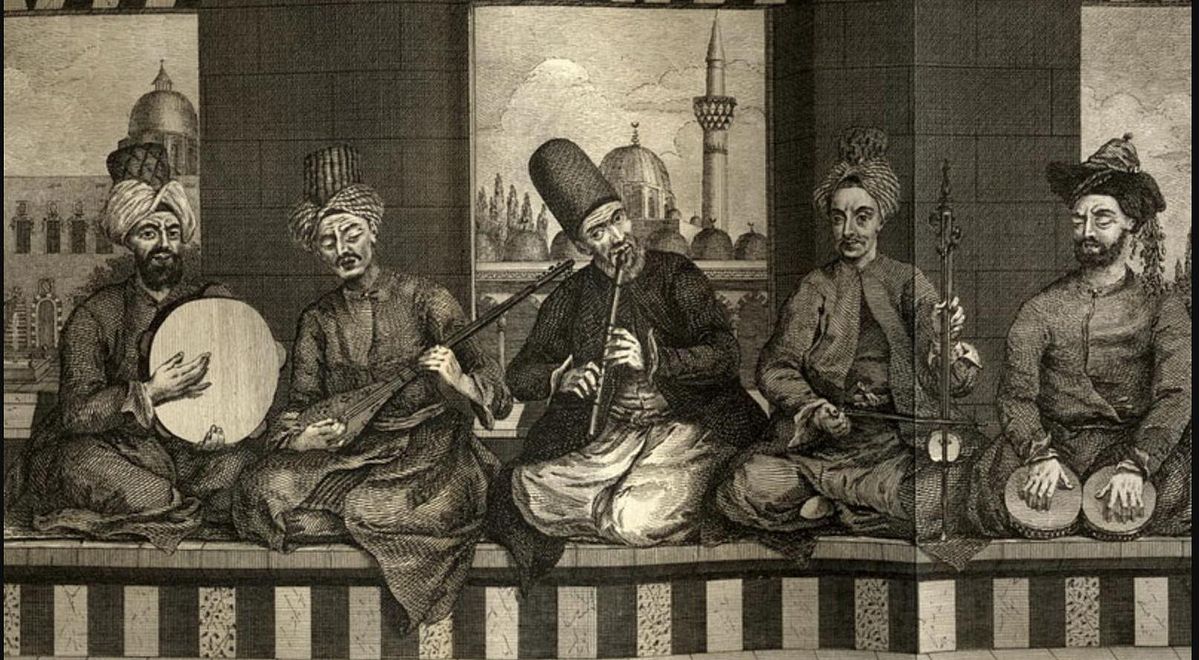
Early Modern Ottoman Music: An Introduction
The Tempest’s Islamic Ghosts
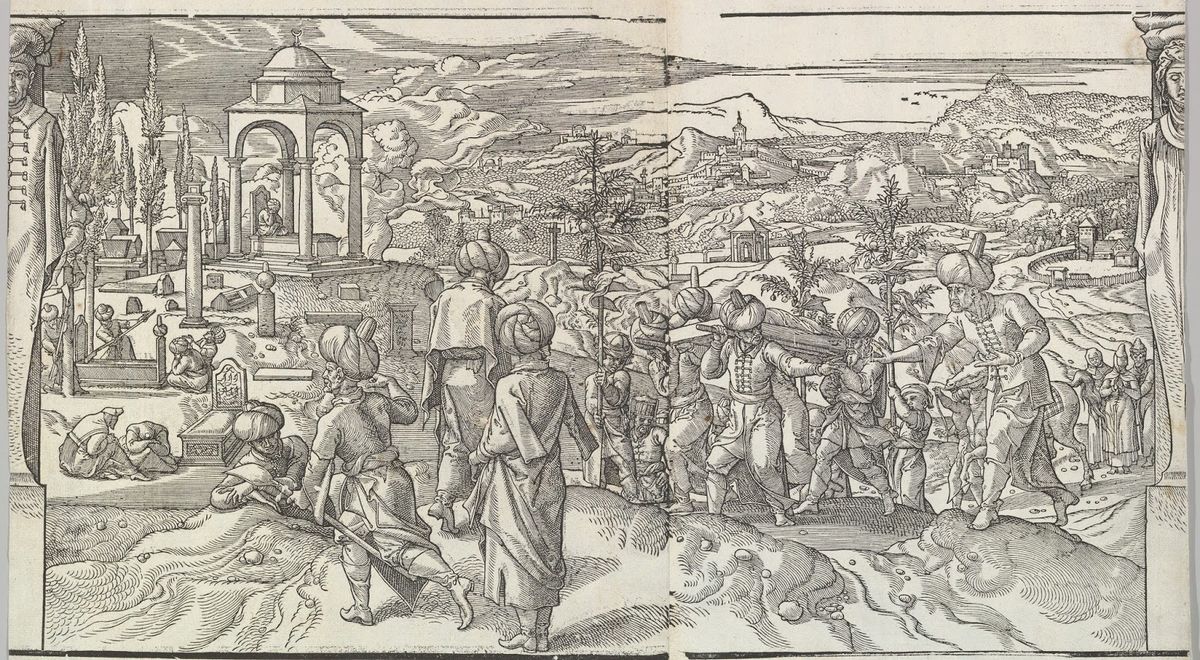
Beyond the "Fatalistic Turk": Challenging Myths of Ottoman Responses to the Plague
Unruly Muslim Women and the Construction of European Masculinity in Philip Massinger’s The Renegado
An Audience with the Sultan's Shaykh

Discovering Hidden History: A Lost Archive Book on Ottoman-British Relations
