


- OVERVIEW
- TIMELINE
- BIBLIOGRAPHY
The sun was one lance high when battle was enjoined. The fighting continued until midday. By noon the enemy was overcome and vanquished to the delight of our friends. By God’s grace and generosity such a difficult action was made easy for us, and such a numerous army was ground into the dust in half a day…From the time of the Apostle until this date only three padishahs gained dominion over and ruled the realm of Hindustan. The first was Sultan Mahmud Ghazi, who, with his sons, occupied the throne of Hindustan for a long time. The second was Sultan Shihabuddin Ghuri and his slaves and followers, who ruled this kingdom for many years. I am the third.
Zahir al-Din Muhammad Babur, The Baburnama
Thus began the rule of Zahir al-Din Muhammad Babur (r. 1526-1530), founder of the Mughal Empire. Born in 1483 to Umar Shaykh Mirza, ruler of Ferghana, and Qutlug Nigar Khanim, Babur could claim descent from Genghis Khan through his mother and Amir Timur (Tamerlane) through his father’s line. After inheriting and expanding his father’s state, Babur launched an invasion of the Delhi Sultanate, which culminated in 1526 with the Battle of Panipat. Babur’s victory at this battle overthrew the Lodhi Dynasty and Babur established himself as the head of his own dynasty, the Mughals, who would rule India for over three centuries. The Mughal Empire was one of the largest, wealthiest and most powerful empires of the Early Modern World, stretching from modern day Afghanistan to Bangladesh and Kerala to Nepal.
The Golden Age of the Mughals saw the illustrious reigns of Emperor Akbar (r. 1556-1605), who consolidated the empire into a cohesive administrative entity and founded an imperial archiving system. During the reign of Akbar’s successor, Jahangir (r.1605-1627), there was a flourishing of art and culture, partly overseen by his consort Nur Jahan (1577-1645) who also acted as the major powerbroker of the period. Shah Jahan (r.1628-1658) is famous for the design and construction of the Taj Mahal, dedicated as the tomb of his beloved consort, Mumtaz Mahal. ‘Alamghir I (r.1658-1707) is renowned for his military exploits and successes and expanded the empire to its greatest extent.
The Mughal Empire witnessed the arrival of European explorers and merchants. The first was the Portuguese navigator, Vasco Da Gama, who in 1498 successfully reached Calicut by travelling around the Cape of Good Hope. This journey opened a direct seaward route to India for Western Europeans for the first time, disrupting the monopoly on Indian spices enjoyed by Arab merchants. The Portuguese went on to establish the Portuguese State in India (Estado Português da Índia) in 1505. Before long, the Portuguese were taking advantage of their naval expertise and were able to move their headquarters from the port of Cochin to their newly conquered base in Goa.
Thomas Stephens, a Jesuit Missionary who arrived in Goa in 1579 aboard a Portuguese ship, was the first Englishman known to have made the journey to India. English traders were not far behind. To the exhausted merchant travellers from a far flung, drastically smaller and geopolitically weaker dominion, the wealth of Mughal India was both dazzling and alluring. In 1600, the East India Company (EIC) was formally granted its royal charter by Queen Elizabeth I (r. 1558-1603), though other English merchants had already found their way to India before this. John Newberry and Ralph Fitch arrived in 1583, in defiance of Portuguese claims to have a monopoly of trade past the Cape of Good Hope. Meanwhile, John Mildenhall reached India in 1603 following an overland journey which had taken him through Europe, the Ottoman Empire and the Safavid Empire. These first traders secured audiences with the reigning Emperor Akbar, often posing as official ambassadors despite having no royal credentials granting them this status.
The first EIC ship to arrive in the Mughal Empire was the Hector, commanded by Sir William Hawkins. Hawkins attempted and failed to negotiate with the then-reigning Emperor Jahangir to secure a trading permit (Farman) and factory for the EIC. The trip yielded some other results, however. In 1612 Emperor Jahangir arranged Hawkins’s marriage to Maryam Khan, an Armenian Christian and daughter of an influential merchant of the Mughal Imperial court. Despite initially gaining favour, Hawkins would leave the Mughal court in disgrace, having made the mistake of appearing before the emperor smelling of strong drink. Hawkins and Maryam set sail for England, but he died on the journey. The widowed Maryam went on to marry EIC merchant, Gabriel Towerson, who had joined the EIC fleet bound for Sumatra.
In 1610 Henry Middleton travelled to India but also failed to secure a Farman to establish trade privileges or set up a factory. However, in 1612 Thomas Best gained a Farman to trade and established the first permanent EIC factory in the port of Surat the following year. The factory would form the base for EIC factors, including living quarters and warehouse space for merchandise. After these preliminary successes, William Edwards was dispatched by the EIC to represent its interests at the Mughal court. Strictly instructed to not emulate Hawkins, who had claimed to be an official English ambassador, Edwards did so, despite having no official credentials from the English Crown.
In the wake of many a merchant and emissary, the first official English ambassador arrived at the Indian port of Surat in 1615. Sir Thomas Roe would be sent as formal ambassador from the court of King James I (r. 1603-1625). His arrival at the darbar (court) of Emperor Jahangir marked a turning point in England’s relationship with India; an encounter which formalised a nascent relationship.
Yet the encounter would not be without its challenges; a combination of diplomatic incompetence, stubbornness, political intrigue and beyond would see the ambassador stumble through four years of negotiations, only to leave empty handed of the trade treaty he sought. The embassy particularly found itself at the mercy of the powerful Empress Nur Jahan, Chief Consort of Emperor Jahangir. Although Roe’s efforts at the Mughal court would not quite yield the desired results, nonetheless this early embassy represented a formal start of a relationship that would prove long, eventful and immensely influential, even to this day.
Traders were not the only English visitors to Mughal India. In the same year of Roe’s arrival, Thomas Coryate also reached India. An eccentric traveller who journeyed across Asia on foot, Coryate learned Persian and performed a flamboyant oration before Emperor Jahangir. Much to Roe’s chagrin at what he deemed undignified behaviour, this spectacle earned Coryate a considerable sum of money as a gift from the emperor.
EIC trading influence in India through the Mughal Golden Age grew but would be tempered both by the authority of the mighty empire and hostile competition from other European traders, most notably the Portuguese, Dutch and French. The 1623 Amboyna Massacre would be a particular low point in relations between the Dutch East India Company (VOC) and the EIC, when Dutch authorities tortured and executed several EIC traders including their lead agent, the aforementioned Gabriel Towerson. This unrest and disruption to trade in the Indonesian Spice islands would lead the EIC to redouble efforts in India.
The 1660 Restoration of Charles II (r. 1660-1685) to the English throne following the turmoil of the Interregnum marked a renewed moment in English diplomatic efforts in India. The EIC sent the new English monarch chests of tea in congratulation on his enthronement, as both a gesture of their support, but also as a canny marketing tool. Charles II later granted the EIC the authority to acquire land and make war with Indian princes. In 1662 the Portuguese ceded control of Bombay to the English monarch as part of the dowry of his Portuguese wife, Catherine of Braganza (1638-1705), daughter of King John IV of Portugal (r. 1640-1656). Charles II would lease the city to the EIC who in 1687 made it its headquarters in Asia, moving from the Mughal city of Surat.
In 1686, EIC governor, Sir Josiah Charles, initiated the conflict that would become known as Child’s War, a foolish blunder made against Mughal India’s most powerful emperor, ‘Alamghir I. The four-year war ended in a humiliating English surrender, requests for pardon at ‘Alamghir’s court and payment of a large fine. To diplomatically remedy the situation, in 1699 the EIC dispatched Sir William Norris, England’s second official ambassador to Mughal India. Norris’s embassy was, however, a spectacular failure, having achieved little while building up an astronomical expense, due in no small part to Norris’s extravagant lifestyle. Norris left India in 1702, with nothing to show for his time there, and then died of dysentery on the return voyage to England.
Following the death of ‘Alamghir I in 1707, turmoil and subsequent decline within the Mughal Empire would allow for increasing outside influence. The Mughals lost swathes of land to the Marathas, while the 1739 invasion by Nadir Shah of Persia (r. 1736-1747) would further weaken the empire.
In 1717 the EIC were finally granted the coveted duty-free trading rights that they desired in Bengal by Emperor Farrukhsiyar (r. 1713-1719). By 1757, following protracted involvement in the affairs of the now fractured Mughal realm, the EIC were in a position not only to drive their European rivals to the political fringes, but even local rulers and potentates. At the Battle of Plassey, the EIC defeated the Nawab of Bengal, Siraj al-Dawlah (r.1756-1757) and oversaw the handing over of his territories first to a puppet and then to the EIC itself. The EIC thus were given the right to collect taxes and run the administration of the region in the same way as other parts of the Mughal Empire. The receipt of the Divan of Bengal is often considered the beginning of the long, chequered history of the British Empire in India.
Curated by Lubaaba Al-Azami and Samera Hassan
Written by Lubaaba Al-Azami
1492 Western Europe does not, as yet, have a direct link to India by sea. As part of efforts to secure a direct trading route, Christopher Columbus, with funding from the Spanish crown, embarks on a voyage from Spain to seek a westward route to India. On October 12, 1492, he arrives in the Americas, a region then unknown to Western Europeans. The mistaken journey contributes to Western European misidentification of indigenous communities in the region as 'Indian'.
1498 Portuguese navigator, Vasco da Gama, becomes the first Western European to reach India by sea around the Cape of Good Hope. It heralds a new era of Western European trade with the Indies.
Babur (r. 1526-1530)
1526 Zahir al-Din Muhammad Babur (1483-1530) defeats Ibrahim Lodhi, Sultan of Delhi, at the Battle of Panipat, thus founding the Mughal Empire. Babur is a descendant of both Mongol conqueror Genghis Khan and Turkic conqueror Amir Timur (Tamerlane). Through his conquests he writes his memoirs, which are first translated into English in 1826 by John Leyden and William Erskine.
Humayun (r. 1530-1556)
1530 Nasir al-Din Muhammad Humayun (1508-1556) ascends the Mughal throne. His reign is an unstable one, featuring both princely conflicts with his rebellious brothers and loss of his empire to Pashtun commander, Sher Shah Suri.
1540 Having lost his throne, Humayun is granted exile in Safavid Persia under Shah Tahmasp.
1555 Humayun reclaims his Mughal throne with Safavid assistance.
Akbar (r. 1556-1605)
1556 Abu’l-Fath Jalal al-Din Muhammad Akbar (1542-1605) ascends the Mughal throne. He hosts scholars and theologians from diverse religions including Catholics from Europe, notably Portuguese Jesuit priests.
1558 Elizabeth I (r. 1558-1603) ascends the English throne. Her reign sees the extensive expansion of trade with the Islamic World.
1579 Thomas Stephens, the first known Englishman in India, arrives in Goa. A Jesuit priest, he learns Konkani and Marathi and writes extensively in his acquired languages for the purposes of religious and linguistic instruction.
1583 John Newberry and Ralph Fitch arrive in Goa having been arrested by the Portuguese at Hormuz and transported to and jailed in Goa.
1600 The East India Company (EIC), with investments from 200 City of London merchants, receives a Royal Charter from Elizabeth I to trade in the East Indies. Originally hoping to trade in spices from the islands which form modern-day Indonesia, the Company is later attracted by the potential profits to be made from the beautiful textiles of India.
1601 First EIC voyage to the Indies led by Captain James Lancaster. It is directed to the Spice Islands of present day Indonesia.
1602 Founding of the Dutch East India Company (VOC), key competitors of the EIC, particularly in the spice trade.
1602 EIC factory established at Bantam in Java.
1603 James I (r. 1603-1625) ascends the English throne. Despite his initial resistance, he pursues the expansionist policy of trade with the Islamic World begun by his predecessor. His reign sees trade with India particularly grow.
1603 John Mildenhall arrives in Lahore following an overland journey crossing Europe, the Ottoman Empire and the Safavid Empire.
1604 Second EIC voyage led by Captain Henry Middleton. Like the first voyage, it is directed to the Spice Islands.
1604 Treaty of London signed, ending hostility between England and the kingdoms of Spain and Portugal. Portugal violently protects trading interests in India and the Indian Ocean but, following the signing of the treaty, the English are permitted to licitly participate in Indian trade.
Jahangir (r. 1605-1627)
1605 Nur al-Din Muhammad Selim Jahangir (1569-1627) ascends the Mughal throne. His court is host to many foreign diplomats, including the first official English ambassador to India.
1607 Departure of third EIC voyage, led by General William Keeling who served as a captain on the second EIC voyage. It is the first to be destined specifically for India. The first two voyages focused on the Spice Islands around Java, Bantam, Sumatra, etc. This third voyage includes the Hector captained by William Hawkins.
1608 Arrival of William Hawkins. He attends Jahangir’s court, pretending to be official English Ambassador, and seeks trading privileges and permission to build a factory in Surat. He impresses the court with his command of Turkish and secures a stipend from the Emperor. On Jahangir’s recommendation, Hawkins marries Maryam Khan, an Armenian Christian lady and ward of the imperial haram. Hawkins would ultimately fail to secure a Farman (permit) for trading privileges, nor permission to establish a factory, and would leave court in disgrace after having appeared before the Emperor smelling of drink.
1610 Sixth EIC voyage to India commanded by Henry Middleton. He too fails to secure a trade permit or English factory.
1611 Mehr al-Nisa (1577-1645) marries Jahangir, rising to be his chief consort. He first grants her the title Nur Mahal (‘Light of the Palace’), and later elevates her to Nur Jahan (‘Light of the World’). Her influence and authority is marked in the Mughal realms, governing many of Jahangir’s decisions including those in relation to diplomatic and trade negotiations. She even mints coins in her name, a privilege usually the sole preserve of the emperor.
1611 First EIC factory established in India at Masulipatnam.
1612 Thomas Best arrives in India. He defeats a Portuguese fleet at the mouth of the Tapti River near Surat. He finally obtains a Farman in January 1613, and the first permanent EIC factory is established in Surat.
1613 The Portuguese capture the Mughal Queen Mother’s pilgrim ship, the Rahimi, despite the ship having a travel pass (Cartaz) purchased from the Portuguese. The incident provokes anger and retaliation from Jahangir, damaging the standing of the Portuguese and improving the position of the English.
1614 The Portuguese are again defeated by four English ships commanded by Nicholas Downton. The event is one of only two references to the English in the memoirs of Emperor Jahangir.
1614 William Edwards reaches India. He is dispatched to the Mughal court to deliver a letter from James I to the Emperor, and to look after English interests at court. The EIC expressly forbids any pretence of him being an ‘ambassador’, sending Edwards as a ‘messenger’ from the King. Edwards still attempts to inflate his own importance, by claiming official credentials from the Crown.
1614 Thomas Smythe, Governor of the EIC, formally proposes sending an official ambassador to India, who must be ‘one of extraordinarye partes to reside att Agra to prevent any plottes that may be wrought by the Jesuits to circumvent our trade’. The decision is made to send Sir Thomas Roe ‘an Embassadour of extraordinarye Countenance and respect’.
1615 Thomas Roe (c.1581-1644) is sent aboard the Lion as first official English ambassador from James I to Jahangir. He arrives at Swally in September 1615. Roe’s efforts to secure trade are heavily dependent on the will of Nur Jahan. He spends an often frustrating few years at the Emperor’s court and does not secure the trade agreement that was the project of his embassy. He returns to London in 1619.
1615 First EIC ship returns to England directly from India (Surat), reflecting India’s growing importance in EIC trading efforts.
1615 English traveller and travel writer, Thomas Coryate, arrives in India. He is perhaps the first English tourist in India. During his time there, he encounters the English ambassador, Thomas Roe, while visiting the imperial court of Jahangir.
1622 Combined Anglo-Persian forces capture Portuguese controlled Hormuz.
1623 Dutch East India Company (VOC) traders attack the EIC factory on the island of Ambon and put the factors, including Gabriel Towerson, and most of their servants to death. The incident becomes known as the Amboyna Massacre. The EIC pulls back from the Spice Islands to a factory at Bantam, western Java.
1625 Charles I (r. 1625-1649) ascends the English throne.
Shah Jahan (r. 1627-1658)
1628 Shahab al-Din Muhammad Khurram Shah Jahan (1592-1666) ascends the Mughal throne. His ascension is particularly bloody, involving the murder of two brothers, two cousins and two nephews, setting a precedent for Mughal princely fratricide thereafter. His reign is marked by lavish architecture, most famously the Taj Mahal.
1632 Mughals capture the Portuguese-controlled port of Hooghly.
1639 Fort St George, an EIC trading fort, established at Madras.
1649 Execution of Charles I, marking the start of the Interregnum.
‘Alamghir I (r. 1658-1707)
1658 Muhi al-Din Muhammad Aurangzeb ʿAlamghir (1618-1707) ascends the Mughal throne. Considered the last major Mughal emperor, under his reign the empire would reach its greatest territorial extent.
1660 The Restoration of the Monarchy sees Charles II (r. 1660-1685) ascend the English throne following the Interregnum. The EIC send him chests of tea in recognition. The new king grants the EIC the right to wage war in India, engage in territorial acquisition and issue currency. Charles II is given the Islands of Bombay as part of the dowry of his Portuguese wife, Catherine of Braganza.
1667 EIC factory established at Calcutta.
1686-1690 Child’s War between the EIC and ‘Alamghir I initiated by EIC governor Josiah Child. It ends in an English surrender, request for pardon at court and payment of a considerable imperial fine.
1685 James II (r. 1685-1688) ascends the English throne.
1687 EIC shifts its headquarters on the West coast of India from Surat to Bombay.
1688-1689 The Glorious Revolution deposes James II and replaces him with his daughter Mary II (r. 1689-1694) and her husband William of Orange (r. 1689-1702).
1697 The East India Company Act passed authorising the formation of a ‘New’ East India Company with exclusive rights to the East Indies trade. The ‘Old’ East India Company is permitted to trade only until September 29, 1701.
1699 William Norris (c. 1658-1702), second official English ambassador to India, reaches Madras. He is appointed under the New Company to the court of ‘Alamghir I to diplomatically remedy the fallout over Child’s War. His embassy is a failed one, achieving little of note and often hindered by traders of the Old EIC in India. His lack of success combined with his extravagant lifestyle loses him favour with the Company who consider him a waste of money. He leaves India in 1702, dying of dysentery on the return voyage to England.
1701 The Old and New EICs agree to merge in order to protect the monopoly of trade with Asia. The signing is completed just after Queen Anne takes the English throne.
1702 Queen Anne (r. 1702-1714) ascends the English throne.
1707 Acts of Union unite the governments of England and Scotland, forming Great Britain. Anne becomes known as Queen of Great Britain and Ireland.
1707 ‘Alamghir I dies; his death is followed by a steep decline in the power of the Mughal Empire, with loss of lands to the Marathas and significant decentralisation to regional courts and rulers.
1714 George I (r. 1714-1727) ascends the British throne.
1717 EIC granted duty free trading rights in Bengal by Farrukhsiyar (1685-1719).
1727 George II (r. 1727-1760) ascends the British throne.
1739 Nadir Shah of Persia (r. 1736-1747) invades India during the reign of Muhammad Shah (r. 1719-1748). The Mughals are defeated at the Battle of Karnal, after which Nader Shah orders Delhi to be sacked.
1757 After the Battle of Plassey, the Nawab of Bengal, Siraj al-Dawlah (r. 1756-1757), surrenders to the EIC. The EIC are then given the right to collect taxes and run the administration of the region by the Mughals. It marks the beginning in earnest of the British Empire in India.
By Lubaaba Al-Azami
Ali M. Athar. Mughal India: Studies in Polity, Ideas, Society and Culture. New Delhi: Oxford University Press, 2006.
Alvi, Sajida Sultana. Perspectives on Mughal India: Rulers, Historians, ‘Ulama and Sufis. Karachi: Oxford University Press, 2012.
Andrea, Bernadette and McJannet, Linda ed. Early Modern England and Islamic Worlds. New York: Palgrave Macmillan, 2011.
Asher, Catherine B. & Talbot, Cynthia. India Before Europe. New York: Cambridge University Press, 2006.
Balabanlilar, Lisa. The Emperor Jahangir: Power and Kingship in Mughal India. London: I B Tauris, 2020.
Balabanlilar, Lisa. Imperial Identity in the Mughal Empire: Memory and Dynastic Politics in Early Modern South and Central Asia. London: I B Tauris, 2012.
Chida-Razvi, Mehreen. ‘A Sultan before the Padshah? Questioning the identification of the turbaned figure in Jahangir Preferring a Sufi Shaykh to Kings’, in Art, Trade and Culture in the Near East and India: From the Fatimids to the Mughals, eds. Alison Ohta, Michael Rogers, Rosalind Wade Haddon. London: The Ginko Library, 2016.
Chida-Razvi, Mehreen. ‘Where is ‘The Greatest city in the East’?: The Mughal City of Lahore in European Travel Accounts between 1556 and 1648’, in The City in the Muslim World: Depictions by Western Travel Writers, eds. Mohammad Gharipour and Nilay Ozlu. Routledge, 2015.
Chida-Razvi, Mehreen. ‘The Perception of Reception: the Importance of Sir Thomas Roe at the Mughal Court of Jahangir,’ Journal of World History 25, Numbers 2-3, June/September 2014: 263-284.
Dale, Stephen F. The Muslim Empires of the Ottomans, Safavids and Mughals. Cambridge: Cambridge University Press, 2010.
Eaton, Richard M. India in the Persianate Age. London: Allen Lane, 2019.
Faruqui, Munis D. The Princes of the Mughal Empire, 1504-1719. New York: Cambridge University Press, 2012.
Fisher, Michael H and Dalrymple, William. Visions of Mughal India: An Anthology of European Travel Writing. London: I B Tauris, 2007.
Fisher, Michael H., Lahiri, Shompa and Thandi, Shinder. A South-Asian History of Britain: Four Centuries of Peoples from the Indian Sub-Continent. Oxford: Greenwood World Publishing, 2007.
Harris, Jonathan Gil. The First Firangis: Remarkable Stories of Heroes, Healers, Charlatans, and Other Foreigners who Became Indian. New Delhi: Aleph Book Company, 2015.
Harris, Jonathan Gil ed. Indography: Writing the Indian in Early Modern England. New York: Palgrave Macmillan, 2012.
Lal, Ruby. Empress: The Astonishing Reign of Nur Jahan. New York: W. W. Norton & Company, 2018
Lal, Ruby. Domesticity and Power in the Early Mughal World. Cambridge: Cambridge University Press, 2005.
Schimmel, Annemarie. The Empire of the Great Mughals: Art, History and Culture. London: Reaktion Books, 2006.
Seth, Vijay K. The Story of Indian Manufacturing: Encounters with the Mughal and British Empires (1498-1947). Singapore: Palgrave Macmillan, 2018.
Strachan, Michael. Sir Thomas Roe, 1581-1644: A Life. Michael Russell: 1989
Subrahmanya, Sanjay. The Career and Legend of Vasco da Gama. Cambridge: Cambridge University Press, 1997.
Subrahmanyam, Sanjay and Alam, Muzaffar. Writing the Mughal World. New York: Columbia University Press, 2011.
Subrahmanyam, Sanjay. Courtly Encounters: Translating Courtliness and Violence in Early Modern Eurasia. London: Harvard University Press, 2012.
Introductory Pre-Modern Race Theory
Compiled by Hassana Moosa
Akhimie, Patricia. Shakespeare and the Cultivation of Difference: Race and Conduct in the Early Modern World. New York: Routledge, 2018.
Archer, John M. Old Worlds: Egypt, Southwest Asia, India, and Russia in Early Modern English Writing. California: Stanford University Press, 2001.
Arvas, Abdulhamit. "Early Modern Eunuchs and the Transing of Gender and Race." Journal for Early Modern Cultural Studies19.4 (2019): 116-136.
Ballaster, Ros. Fabulous Orients: Fictions of the East in England 1662–1785. Oxford: Oxford University Press, 2005.
Bartels, Emily C. Speaking of the Moor: From" Alcazar" to" Othello". Philadelphia: University of Pennsylvania Press, 2008.
Barthelemy, Anthony G. Black face, maligned race: the representation of blacks in English drama from Shakespeare to Southerne. Louisiana: LSU Press, 1987.
Bovilsky, Lara. Barbarous Play: Race on the English Renaissance Stage. Minneapolis: University of Minnesota Press, 2008.
Britton, Dennis A. Becoming Christian: Race, Reformation, and Early Modern English Romance. New York: Fordham University Press, 2014.
Burton, Jonathan. Traffic and Turning: Islam and English Drama, 1579-1624. Delaware: University of Delaware Press, 2005.
Chakravarty, Urvashi. "More Than Kin, Less Than Kind: Similitude, Strangeness, and Early Modern English Homonationalisms." Shakespeare Quarterly 67.1 (2016): 14-29.
Corredera, Vanessa. "“Not a Moor exactly”: Shakespeare, Serial, and Modern Constructions of Race." Shakespeare Quarterly 67.1 (2016): 30-50.
d'Amico, Jack. The Moor in English Renaissance Drama. Florida: University of Florida Press, 1991.
Dadabhoy, Ambereen. "The Moor of America: Approaching the Crisis of Race and Religion in the Renaissance and the Twenty-First Century." Teaching Medieval and Early Modern Cross-Cultural Encounters. Palgrave Macmillan, New York, 2014. 123-140.
Degenhardt, Jane H. Islamic Conversion and Christian Resistance on the Early Modern Stage. Edinburgh: Edinburgh University Press, 2010.
Erickson, Peter, and Clark Hulse, eds. Early modern visual culture: Representation, race, and empire in Renaissance England. Philadelphia: University of Pennsylvania Press, 2000.
Erickson, Peter, and Kim F. Hall. "A New Scholarly Song”: Rereading Early Modern Race." Shakespeare Quarterly 67.1 (2016): 1-13.
Erickson, Peter. "Invisibility speaks: Servants and portraits in early modern visual culture." Journal for Early Modern Cultural Studies 9.1 (2009): 23-61.
Espinosa, Ruben and David Ruiter eds. Shakespeare and Immigration. New York: Routledge, 2016.
Fuchs, Barbara. "The Spanish Race" in Rereading the Black Legend: the discourses of religious and racial difference in the Renaissance empires eds. Margaret R. Greer, Walter D. Mignolo, & M.Quilligan.Chicago: University of Chicago Press, 2007.
Feerick, Jean E. Strangers in Blood: Relocating Race in the Renaissance. Toronto: University of Toronto Press, 2010.
Floyd-Wilson, Mary. English ethnicity and race in early modern drama. Cambridge: Cambridge University Press, 2003.
Gillen, Katherine. Chaste Value: Economic Crisis, Female Chastity and the Production of Social Difference on Shakespeare's Stage. Edinburgh: Edinburgh University Press, 2017.
Habib, Imtiaz. Black Lives in the English Archives, 1500-1677: Imprints of the Invisible. Vermont: Ashgate, 2008.
Habib, Imtiaz. Shakespeare and race: Postcolonial praxis in the early modern period. Maryland: University Press of America, 2000.
Hall, Kim F. Things of darkness: Economies of race and gender in early modern England. New York: Cornell University Press, 1995.
Hendricks, Margo, and Patricia Parker eds. Women,'Race' and Writing in the Early Modern Period. London: Routledge, 1994.
Heng, Geraldine. The invention of race in the European Middle Ages. Cambridge: Cambridge University Press, 2018.
Iyengar, Sujata. Shades of difference: Mythologies of skin color in Early Modern England. Philadelphia: University of Pennsylvania Press, 2005.
Jones, Eldred D. Othello's Countrymen: The African in English Renaissance Drama. Published on behalf of Fourah Bay College, the University College of Sierra Leone [by] Oxford University Press, 1965.
Jones, Eldred D. The Elizabethan Image of Africa. Charlottesville: University of Virginia Press, 1971.
Kaplan, Paul HD. "Black Turks: Venetian Artists and Perceptions of Ottoman Ethnicity.’’ in The Turk and Islam in the Western Eye, 1450–1750: Visual Imagery before Orientalism ed. James G. Harper. Farnham: Ashgate, 2011.
Little, Arthur L. Shakespeare Jungle Fever: National-Imperial Re-Visions of Race, Rape, and Sacrifice. California: Stanford University Press, 2000.
Loomba, Ania. Gender, race, renaissance drama. Manchester and New York: Manchester University Press, 1989.
Loomba, Ania, and Jonathan Burton, eds. Race in Early Modern England: A Documentary Companion. Basingstoke: Palgrave Macmillan, 2007.
MacDonald, Joyce G. Women and race in early modern texts. Cambridge: Cambridge University Press, 2002.
Pierce, Leslie. “An Imperial Caste: Inverted Racialization in the Architecture of Ottoman Sovereignty” in Rereading the Black Legend: The Discourses of Racism in the Renaissance Empires eds. Margaret R. Greer, Walter D. Mignolo, & M.Quilligan. Chicago: University of Chicago Press, 2007.
Robinson, Benedict. Islam and Early Modern English Literature: The Politics of Romance from Spenser to Milton. Basingstoke: Palgrave Macmillan, 2007.
Shahani, Gitanjali G. Tasting Difference: Food, Race, and Cultural Encounters in Early Modern Literature. New York: Cornell University Press, 2020.
Singh, Jyotsna G. Colonial narratives/cultural dialogues:" discoveries" of India in the language of colonialism. New York: Routledge, 1996.
Smith, Ian. Race and Rhetoric in the Renaissance: Barbarian Errors. New York: Palgrave Macmillan, 2009.
Thompson, Ayanna. Performing race and torture on the early modern stage. New York: Routledge, 2013.
Thompson, Ayanna, eds. The Cambridge Companion to Shakespeare and Race. Cambridge: Cambridge University Press, 2021.
Vaughan, Virginia M. Performing Blackness on English Stages, 1500-1800. New York: Cambridge University Press, 2005.
Whitaker, Cord J. Black Metaphors: How Modern Racism Emerged from Medieval Race-Thinking. Philadelphia: University of Pennsylvania Press, 2019.
Young, Sandra. The Early Modern Global South in Print: Textual Form and the Production of Human Difference as Knowledge. Farnham: Ashgate, 2015.
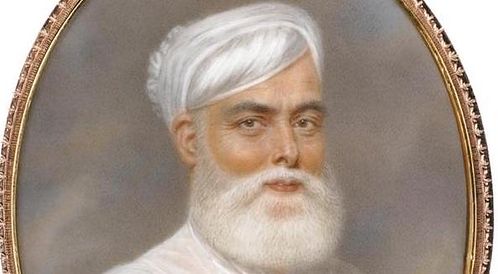
The Nawab, the Surgeon, and the Parrot: A Persian Manuscript Between Arcot and Northumbria
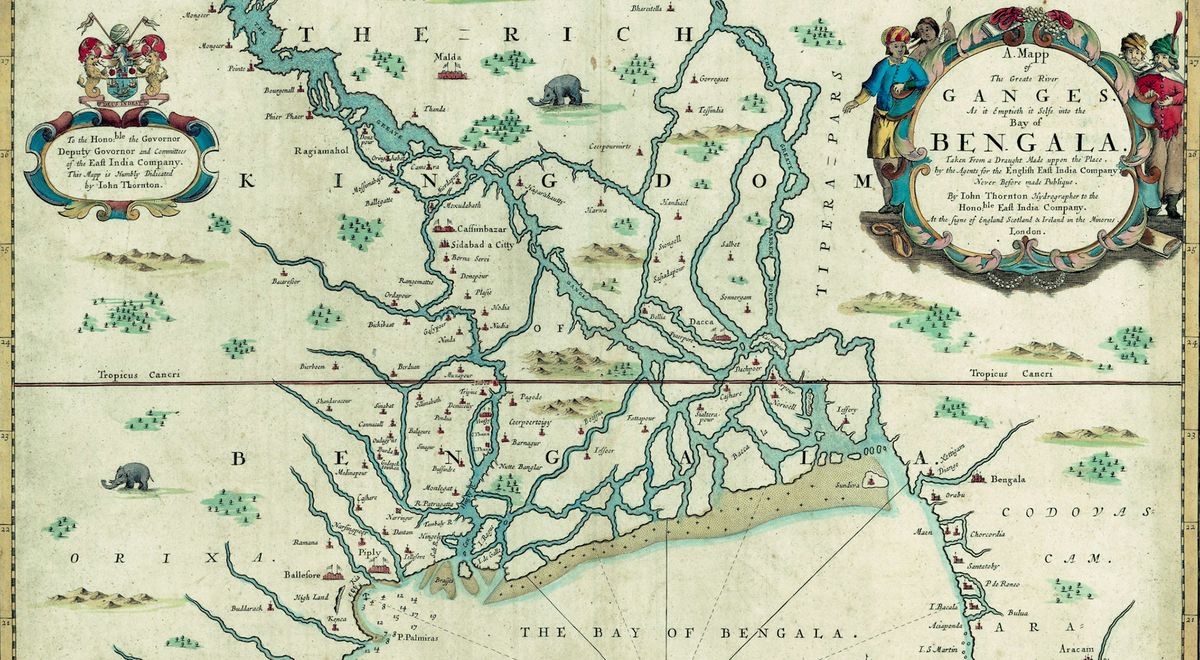
When No Single Power Held Hegemony: Thomas Bowrey’s Account of Bay of Bengal (1669-1679)
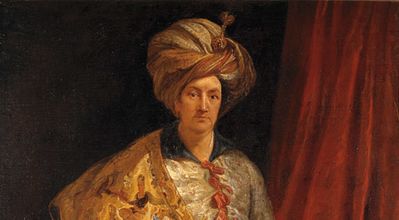
Curious Encounters: Thomas Coryate and the Sherleys on the Persian Frontier

Mughal Matriarchs: The Untold Power of Royal Women in the Renaissance

A Mughal Lady and an English Khan

An English Refugee in Mughal India
