

An Audience with the Sultan's Shaykh
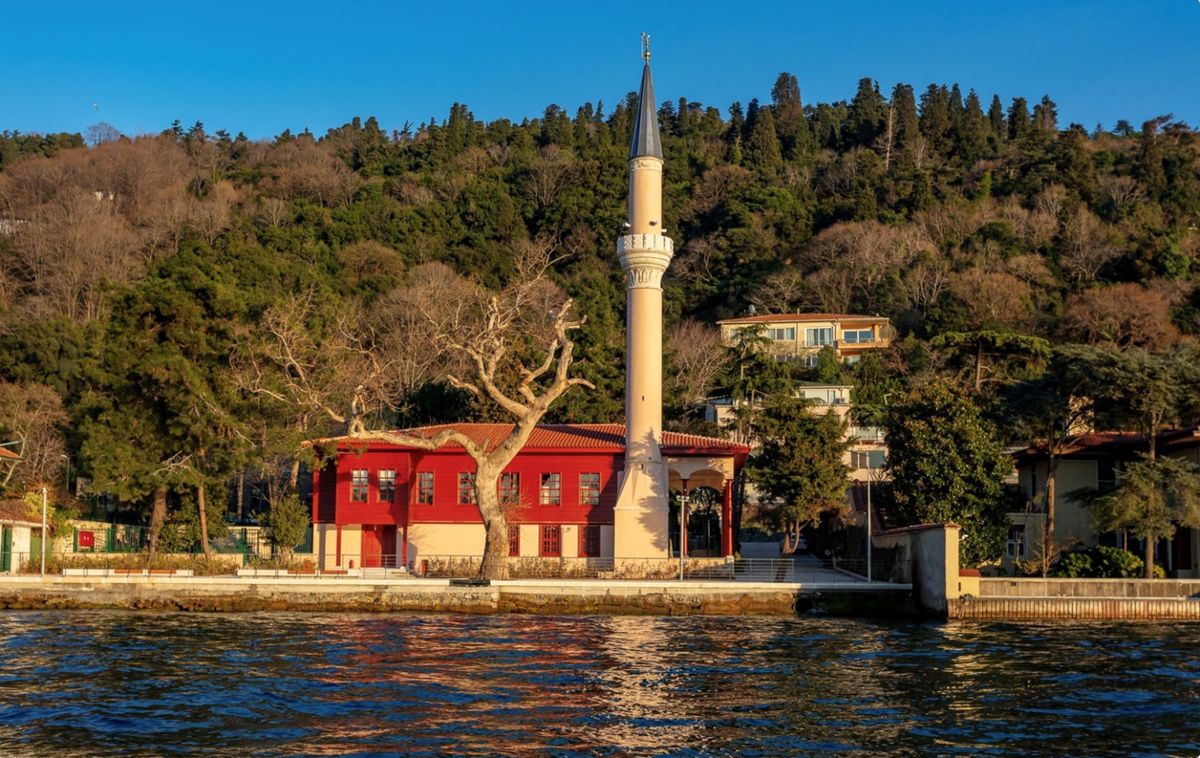
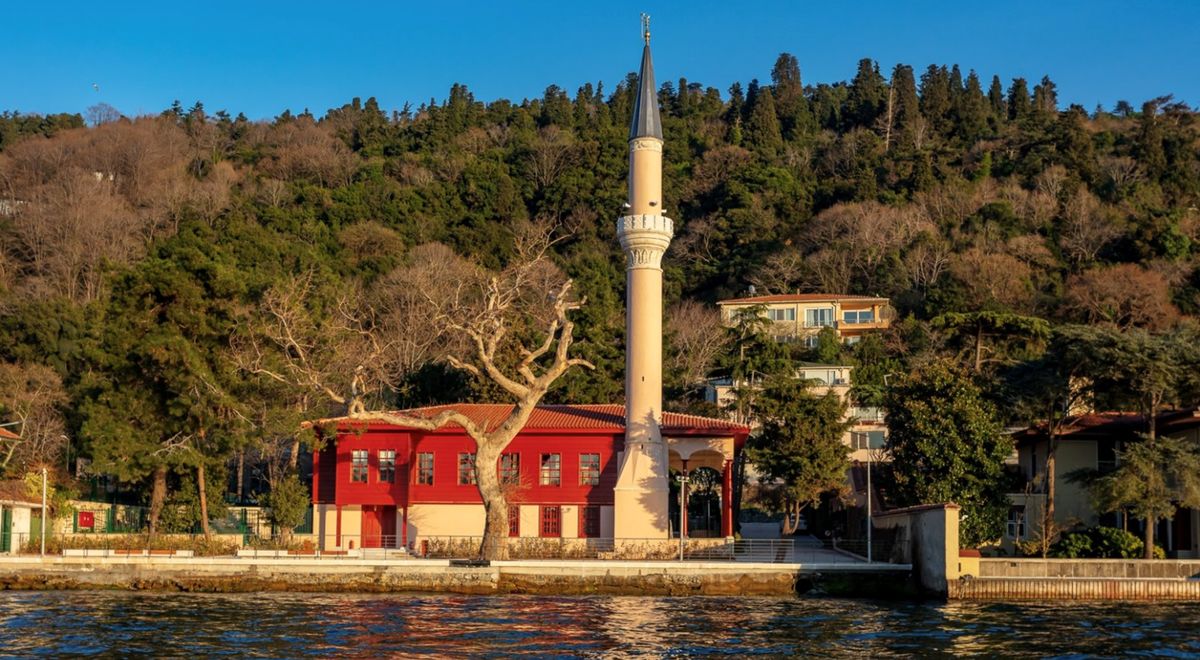
Vaniköy Mosque, built by Vani Mehmed Effendi in Istanbul, accessed here.
I was searching for one thing, and found another- such is the happy, though sometimes frustrating serendipity of the researcher. Trawling through the travelogues of various early modern travellers to Islamic lands, I came across the report of an intriguing meeting between Sir Thomas Baines, physician and lifelong partner of the English ambassador to the Ottoman court Sir John Finch, and Vani Mehmed Effendi, the private religious advisor to Sultan Mehmed IV, famed orator and preacher to the Ottoman army.
The English embassy to the Ottoman court in 1676 was focused on securing the renewal of its Ottoman capitulations- an agreement that granted specific trading privileges for English traders in Ottoman territory. Presumably entreated by Sir John Finch to procure an audience with the influential Sheikh in order to improve English standing in Ottoman eyes, Thomas Baines braved the plague-ridden streets of Edirne in the summer of that year with his Greek dragoman to meet the revered Vani Effendi. Baines related the ensuing interaction to another Englishman in Edirne, the chaplain John Covel, who described it in his diary.
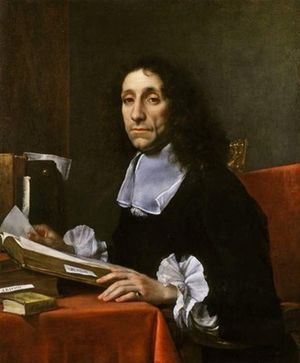
Image: Sir Thomas Baines, accessed via Wikipedia.
The delicate interplay of power, vulnerability, religious sincerity and expedient diplomacy are all on display during this short, reported conversation. Baines is invited by Vani Effendi to sit and ask whatever questions he has about the Islamic faith. He begins by asking questions about the equality of male and female souls. Baines asks Vani Effendi if women will be present in Heaven, to which Vani Effendi replies in the affirmative, despite the vain attempts of some evil husbands in this life to drag their wives down to Hell with them in the Hereafter.
Baines then asks an analogous question to illustrate his opinion of the unfairness of Vani Effendi’s assertion that ultimately, salvation will only be available to Muslims. There being two Christian boys present at the gathering, Baines points at them and asks:
If you had lost…a Jewell, and should bid these two seek it, and tell them where abouts it was to be found; one being more successful then the other, finds it; the other notwithstanding being very industrious, and leaving no stone or stick unturned, perhaps finds onely a crisstall: shall this son be blamed for his ill successe, notwithstanding his indeavours were as much, perhaps more then the other?
Baines’ analogy causes Vani Effendi to become visibly emotional, but he persists in the assertion that only Muslims will be saved, and that all those who have heard of Islam must convert. Baines replies that he himself had heard of Islam, and had read the Qur’an, but now knows that it was ‘wrongly translated’ and this erroneous understanding of Islam ‘rather predjudic’d him than furthered him in his belief’. He then gives a description of his own belief system:
[Baines] told what kind of Christian he was, viz., he would rather dye then worship either crosse. Pictures, Images, or the like. He adored onely one true God, and lived in his fear onely; he believed a Mussulman, living up to the height of his law, may be undoubtedly saved. He thought himselfe obliged (though it was never so absolutely in his power to do it) not to touch a hair of a Mussulman's head for his difference in religion, but rather to help, assist, relieve, and cherish them in every good office that he was able to doe for them.
Baines highlights the similarity of his beliefs with those of Muslims and asserts that not only does he believe that Muslims who live by Islamic law will achieve salvation, but that it is his religious duty to defend and assist them in their endeavours to be good Muslims. He positions himself as an ally to the Muslims, crucially, not in the worldly terms that his companion the ambassador John Finch would have utilised in the Sultan’s court, but in spiritual, religious terms. Moreover, he indicates that this would be the stance of any true Christian who, like him, eschewed worship of ‘crosse, Pictures, Images, or the like’.
In Covel’s relation, Baines states that Vani Effendi is overcome with weeping, and the assembled audience present (which seems to be substantial) loudly express their approval of Baines’ words with the phrase ‘E Adam’- i.e. that he is a good man. Vani Effendi invites Baines to accept Islam, since he is already so close to Muslims in faith.
In an act of exceptionally elegant diplomatic agility, Baines declines the invitation to Islam on the grounds that at 55 years of age, ‘his bones were dryed and hardened to their forme; and his understanding was in like manner settled by long practice of his own religion’, the undoing of which would take a great deal of time and effort.
Of course, this relation of the conversation between Baines and the Shaykh cannot be taken at face value. In the primary instance, the conversation is being conducted via a (Greek, Christian) dragoman, who one assumes may not be adequately qualified in the technicalities of Islamic religious rulings to translate the complex answers delivered by Vani Effendi. His own prejudices would have been present in his translations, a point Covel muses on as he notes that it must have been ‘odde’ for the Greek who ‘worships all these things [crosses, images etc], and curses a Turk to the Divel’ to be compelled to translate Baines’ iconoclastic and pro-Muslim speech to Vani Effendi.
In the second instance, although Baines is assured of his safety and liberty to speak his mind, he is vulnerable. He is in foreign territory and an unofficial member of a diplomatic entourage of relatively small import against the giant of the Ottoman Empire. He is also a Christian in an Islamic space, one in which the Muslims hold the power. As Covel notes, the dragoman becomes uneasy about the messages he is being forced to translate between Vani Effendi and Baines, since although ‘they might not touch [Baines] yet they might chastise him for speaking anything about or against this Law.’ The interaction is potentially fraught with danger for both Baines and his dragoman, and as such the atmosphere would have been less imbued with the entire liberty that the shaykh promised Baines, than would have been preferable for a truly productive theological discussion.
Thirdly, the narration itself is compromised both by Baines’ oral relation to Covel on the events narrated and on Covel’s additional editorial choices. Covel does not disguise his own prejudice against Vani Effendi, labelling him a ‘cox-comb’ and comparing him to the Pope. Throughout the narration Baines is presented as rational and unmoved, whereas Vani Effendi is the one weeping and exclaiming. Covel does not give any sense of the feelings that Baines may have experienced during this encounter, or how he felt about being invited to become a Muslim. That Baines was not interested in becoming a Muslim is assumed evident by Covel, but Baines himself does not express any opposition to Islam during the conversation. It is true that Baines could not have publicly converted to Islam without obliterating the entire edifice of his life. Likewise, he could not definitively reject the appeal to conversion without great delicacy, for fear of jeopardising the inroads made with the Sultan’s religious mentor. Here, it was necessary to carefully weigh matters of faith and conscience against the political demands of the situation.
It seems that Baines made a positive impact on Vani Effendi, who invited him to visit again. Baines did not return but sent further questions to him about Islam, firstly via an Italian convert acquaintance, and later in writing, until he ‘tired’ of the correspondence. By which point, the precious capitulations to the English were renewed, and therefore further diplomatic efforts were no longer required.
The narration of this interaction highlights the difficulties present in reading and extrapolating conclusions about faith and confession in tense political climates. What appears at first glance to be a free and open discussion on religion is, when examined in its greater context, far more ambiguous. The dialogue takes place in a space where expressions of belief could potentially be obfuscated, exaggerated, or denied for the purposes of political expediency, audience pleasing, or even the ensuring of personal safety. Ultimately, the intentions and impacts of this dialogue are housed in the hearts of the interlocutors themselves. However, this ambiguity does not preclude the scenario that sincerity was present, as seems to be evidenced in Vani Effendi’s tears and in Thomas Baines’ impassioned iconoclasm. As such, it remains a fascinating example of an attempt on the parts of Vani Effendi and Thomas Baines to create a space of understanding between Islam and Christianity through a willingness to ask and answer difficult questions in a spirit of civility and respect, notwithstanding the rumbling of diplomatic machinery in the background.
Sources
Abbot, George Frederick. Under the Turk in Constantinople: A Record of Sir John Finch's Embassy, 1674-1681. London: Macmillan & Co., 1920.
Baer, Marc David. Honored by the Glory of Islam: Conversion and Conquest in Ottoman Europe. Oxford: Oxford University Press, 2008.
Bent, Theodore ed. Voyages and Travels in the Levant. London: Haklyut Society, 1893.
Title Image: Vaniköy Mosque, built by Vani Mehmed Effendi in Istanbul, accessed here.

#/media/File:Thomas_Baines_Fitzwilliam_Museum.jpg)