

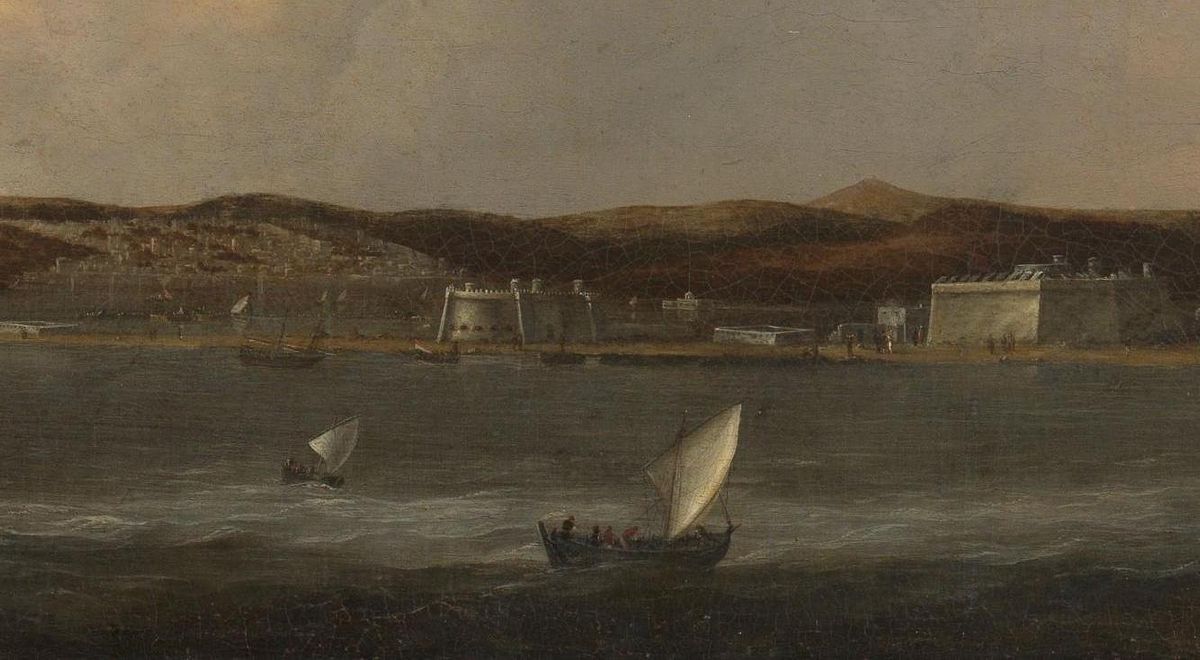
The Incomparable Urania: A Tunis-Born Daughter
This post is adapted from research undergirding my newly-published book Britain and the Ottoman Maghreb, 1662–1712: Merchants, Consuls, and Cultural Exchange (Oxford University Press, 2026). Urania Goodwyn also appears in the Oxford Dictionary of National Biography.
My last post ended with a death: in 1695, the formidable Englishwoman Edith Stedham-Goodwyn, whose rise from husband-abandoned housekeeper to influential merchant and consolessa, suddenly died—leaving her husband Thomas and daughter Urania alone.
Fast forward four years. It’s 1699. The Goodwyns are poised to leave home: Thomas has a successor to the consulship, friends and family are ready to welcome them in London. Then a letter arrives. Benjamin Lodington, newly-minted consul in Tripoli and brother to their long-time friend and impending London host Nathaniel Lodington, has a proposal for the fourteen-year-old Urania.
He wrote formally to Thomas Goodwyn (switching from using a scribe for business letters to his own hand for this ‘affaire of greater motive’):
Knowing you a judicious Gentelman, p.sume you will not Condeme me in this my ambition, in seeking to advance my ffortune, by ye happeness of getting under yor protection & to ingrafte my selfe into soe worthy a famely, by ye Donative of your most Vertueous & Butifull Daughter Urania in marage, of whoses Excelent parts & good nature, I am soe Credably Informed, that I Question not but wee should be verry happy together – Assureing you she shall be patrona & have all ye Civill treatments that belongs to a Gentelwoman – pray sr pardon this bouldness & old way of Courtship, being under Cercomestances that hinders my p.sonall appeareanc I will not troble you further at present but humbly Desireing pardon from ye InComparable urania for this p.sumption[1]
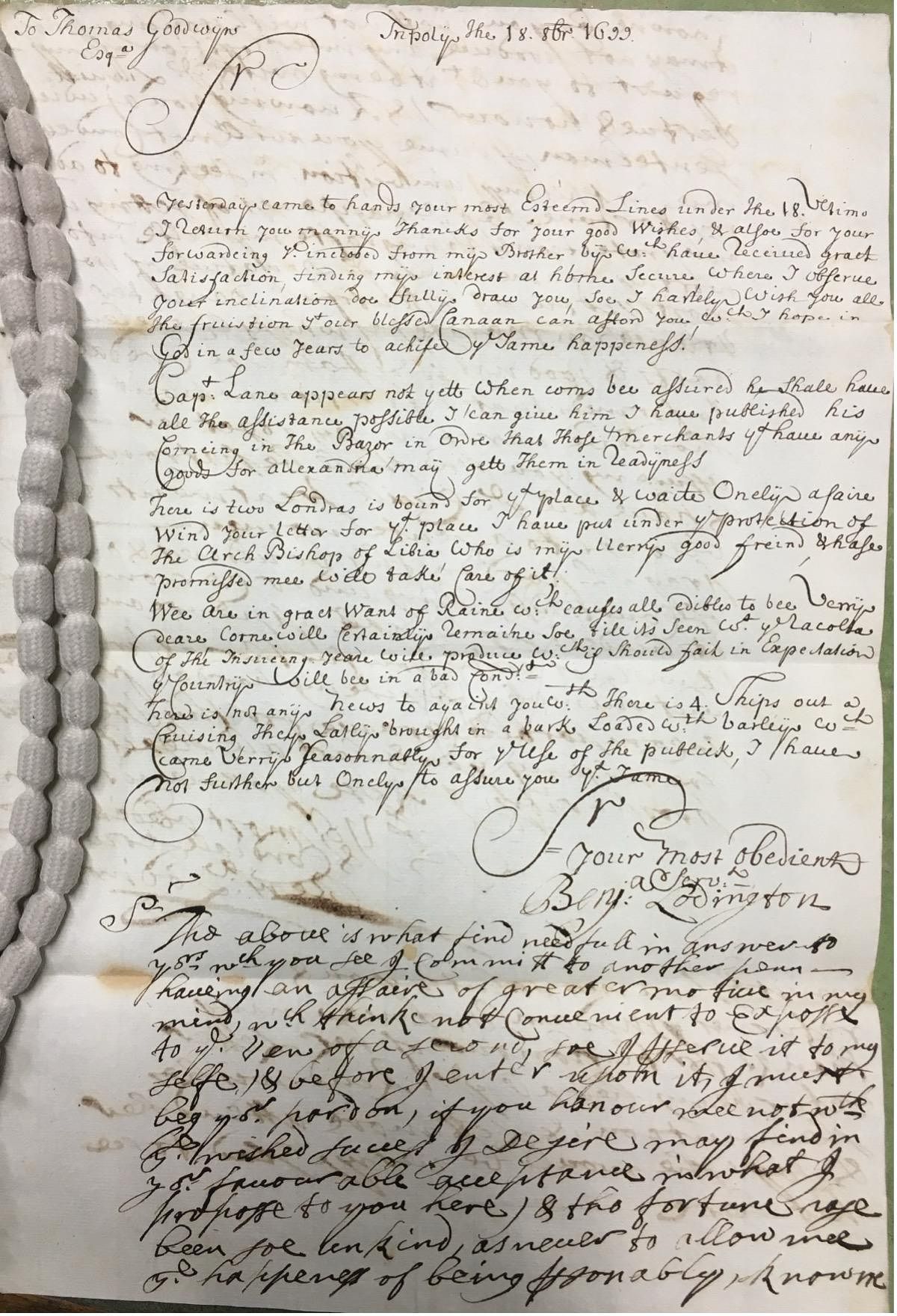
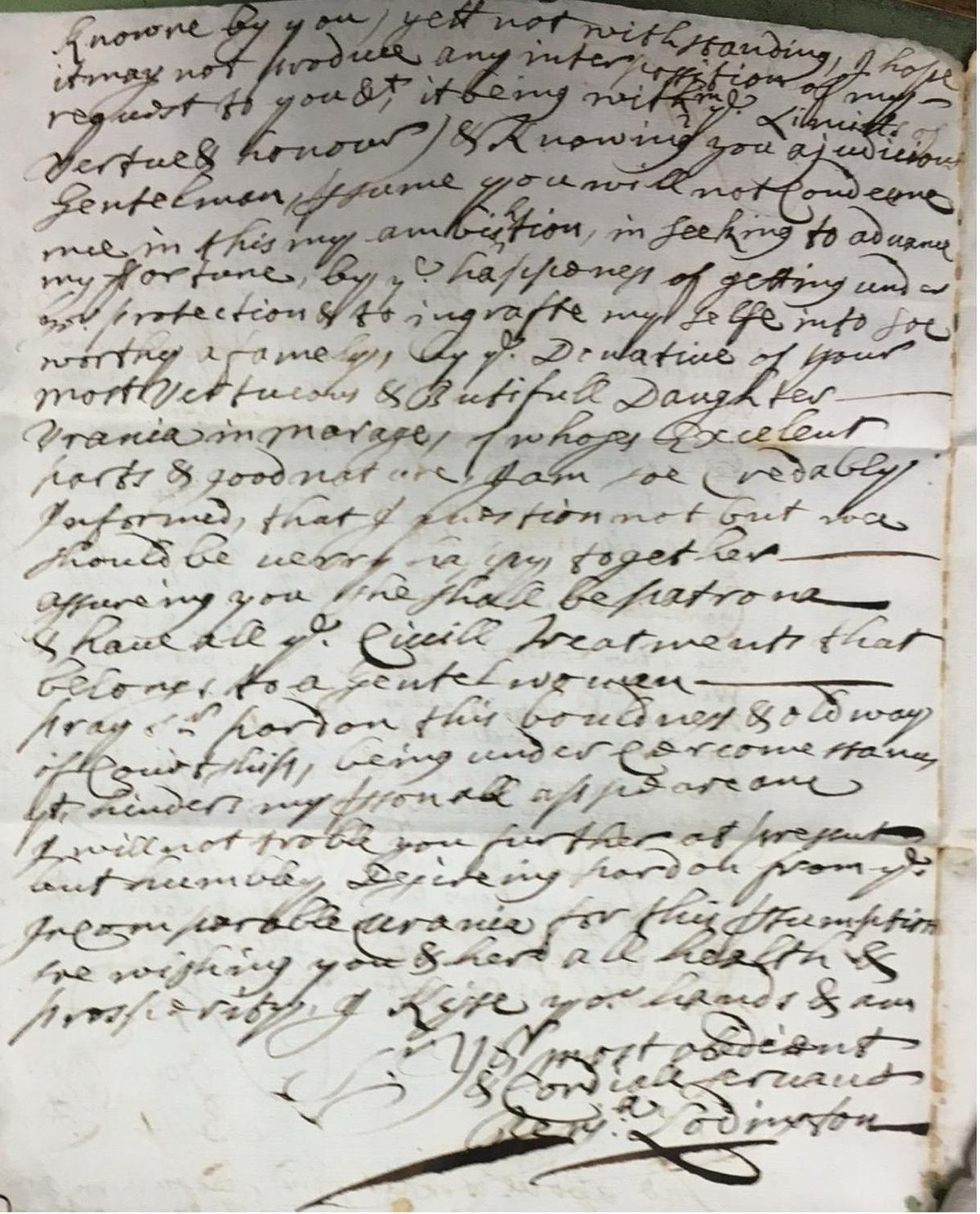
Benjamin Lodington to Thomas Goodwyn, 18 October 1699, FO 335/13/9, The National Archives, Kew. Note the change of hand.
This is the story of what happened between: how grieving, doting father and his merchant partner, a succession of substitute mother-figures, and a hybridised Anglo-Maghrebi childhood shaped an ‘inComparable’ young woman—and what happened next.
Substitute Mothers
At the time of his wife’s death, Thomas Goodwyn had been considering retirement for years. Now, with his daughter nine years old and motherless, he resolved to return home, step back from active trade, and give Urania the mentorship of distinguished British women. As soon as he heard the news in London, long-time merchant collaborator and MP Alexander Rigby encouraged Goodwyn to return immediately:
since you have a pritty Daughter, lett me intreate you, to make my Wife, as her mother, am sure shee’l give her a vertuous Example, and study, to make her, as good and delightfull a Creature, as a man in the World would Desire … what ever you do, lett her not bee breed amongest Pedanticke, formall, whineing, p.sones; a Vertuous & Generous & Gentlewoman Example, is best[2]
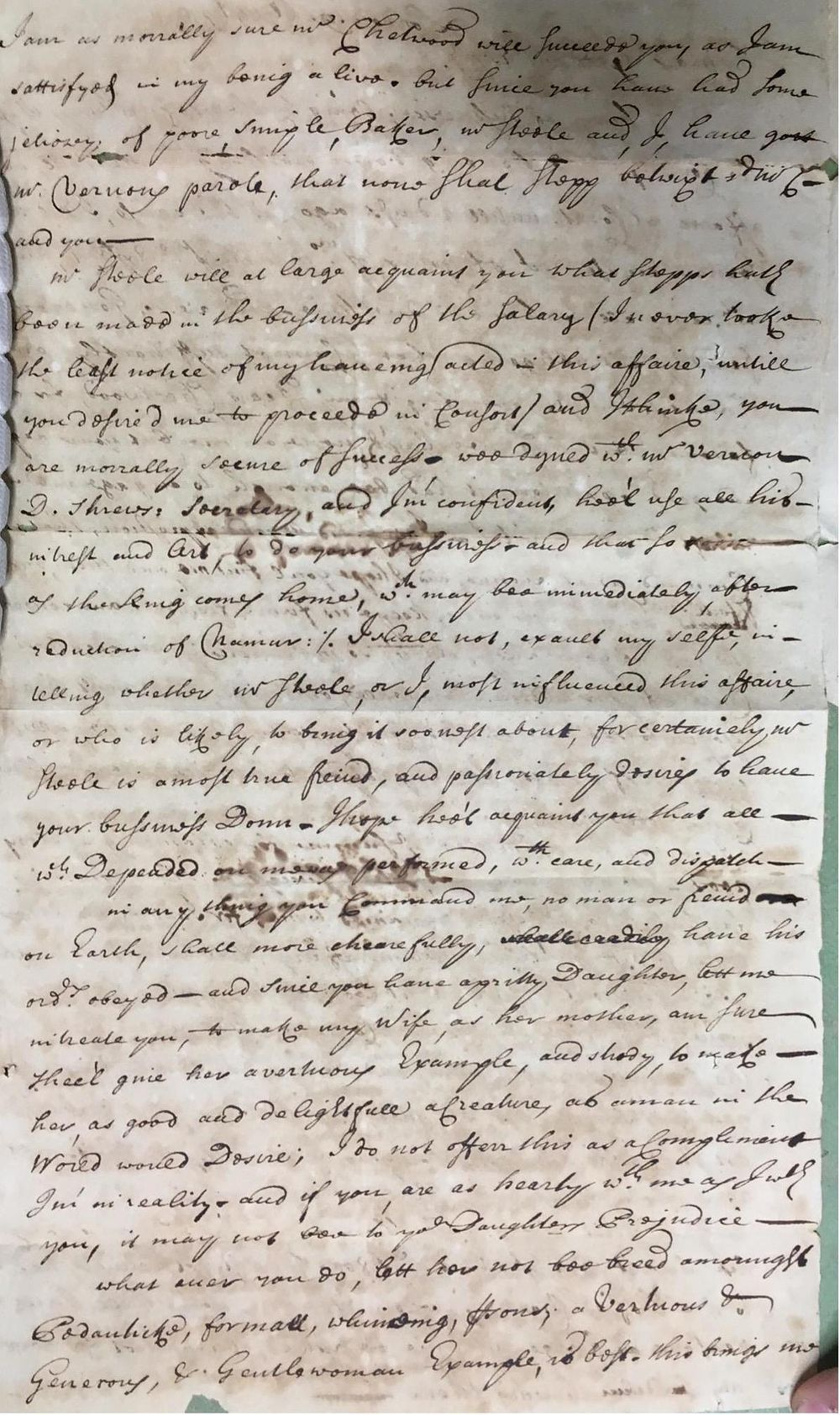
Alexander Rigby to Thomas Goodwyn, 9 August 1695, FO 335/11/4, The National Archives, Kew.
For reasons of finance and the need to train a suitable consular successor, they could not immediately leave, so Thomas in the interim found substitute mother figures in Tunis. What each of these women offered, beyond their personal affection, was something Goodwyn couldn't supply himself: a working model of the British gentlewoman Urania would need to become. In 1694, and apparently with minimal enthusiasm, the Tripolitan government yielded to French threats and bribes to declare war on Britain. While the British consul Nathaniel Lodington initially hoped to smooth things over, when Thomas Baker, consul in Algiers, parachuted in, negotiated a new and problematic treaty, and ousted Lodington for his own candidate, he and his wife Jane escaped to a long-haul exile in Tunis—arriving by staggering convenience just weeks after Stedham-Goodwyn’s death. Jane was a controversial figure—repeatedly accused of sexual misconduct, petulancy, and arrogance—but she nevertheless formed a strong bond with Urania, and repeatedly signalled her affection continued well after their departure in 1696.[3] Next came Goodwyn’s sister and niece Dorothy and Lucy Newark, who visited as tourists from 1698-99: as Benjamin Steele commented, ‘I thinke, it will be infinitely yor Daughters advantage, to be under ye Conduct, of [Lucy] so vertuous, ingenuous, & Excellent temperd person, & for whom … we have here a great Respect...[and your sister] is a truly good Woman, & deserves yor highest regard.’[4] Lucy and Urania likewise formed a tight bond, cemented by correspondence and the exchange of material goods.
Outside of this, Goodwyn and partner James Chetwood took care of Urania— and sometimes struggled. Even before Edith Stedham-Goodwyn’s death, Chetwood showed concern for Urania’s development—in February 1695, he reported to Goodwyn who was travelling on business, that the nine-year-old Urania was ‘in health, but a little more pensive mellancholly then when she had ye Company of Nino; I think he must be calld back againe, rather than let her want a play fellow to Keep her in excercise & chearfull’.[5] (Nothing else is known of Nino, though the name suggests an Italian origin). But this parental responsibility took on a new urgency afterward. In 1697 Chetwood begged regarding the eleven-year-old Urania, ‘pray let me know how domestic affayres goe, wt amendment or reformation in Madm Urania’s course of life, whither groune more social & comes to table, if applyes to writing, reading & some degree of care & inspection in house affayres.’[6] But they were responsive to her wishes as well—the same year, Chetwood invited Goodwyn and Urania to visit him in Bizerte, commenting ‘if you leave her behind, seeing ye place is sickly, so much the better, but this shee’le hardly Consent to’.[7] When the Newarks left, Chetwood worried, ‘theire departr I doubt will cause madm Urania to be melancholly – she ought indeed to have some suitable Companion’.[8]
Meanwhile, the texture of daily life in Tunis left its own, less tutored marks. Exchanges of material culture indicate Urania led a hybridised life as the Tunis-born daughter of British expatriate parents. In 1697, Chetwood sent home a lobster from Bizerte, which Goodwyn had boiled and left ‘cold at Urania’s disposall who returns hearty thanks for it, and the prunells, nutts aples etc.’; he later sent her some ‘Dammasks and Tabbys’ salvaged from an English wreck ‘for summer Garments please advise the Collours, the salt water has taken off theire beauty but may still serve for every days weare or other uses’; in the same year, Urania had begun ‘to learne musick upon the Ghitarra’.[9] Heading home via Marseilles, Lucy organised for Urania clothes and sweetmeats from there and Paris, advised on French hairstyling and fashions, encouraged her in the making of linen shirts for her father, and apologised for being unable to find her a pet dog.[10] We saw last time how Urania received colourful Algerian ribbons; Goodwyn also ordered some ‘hornè bracelets’ for her from Algiers, which came in the hands of a corsair captain named Hussein Rais ben Shab’an.[11] These experiences took the experimental materiality of her father’s generation a step further, and marked out a participant in several worlds.
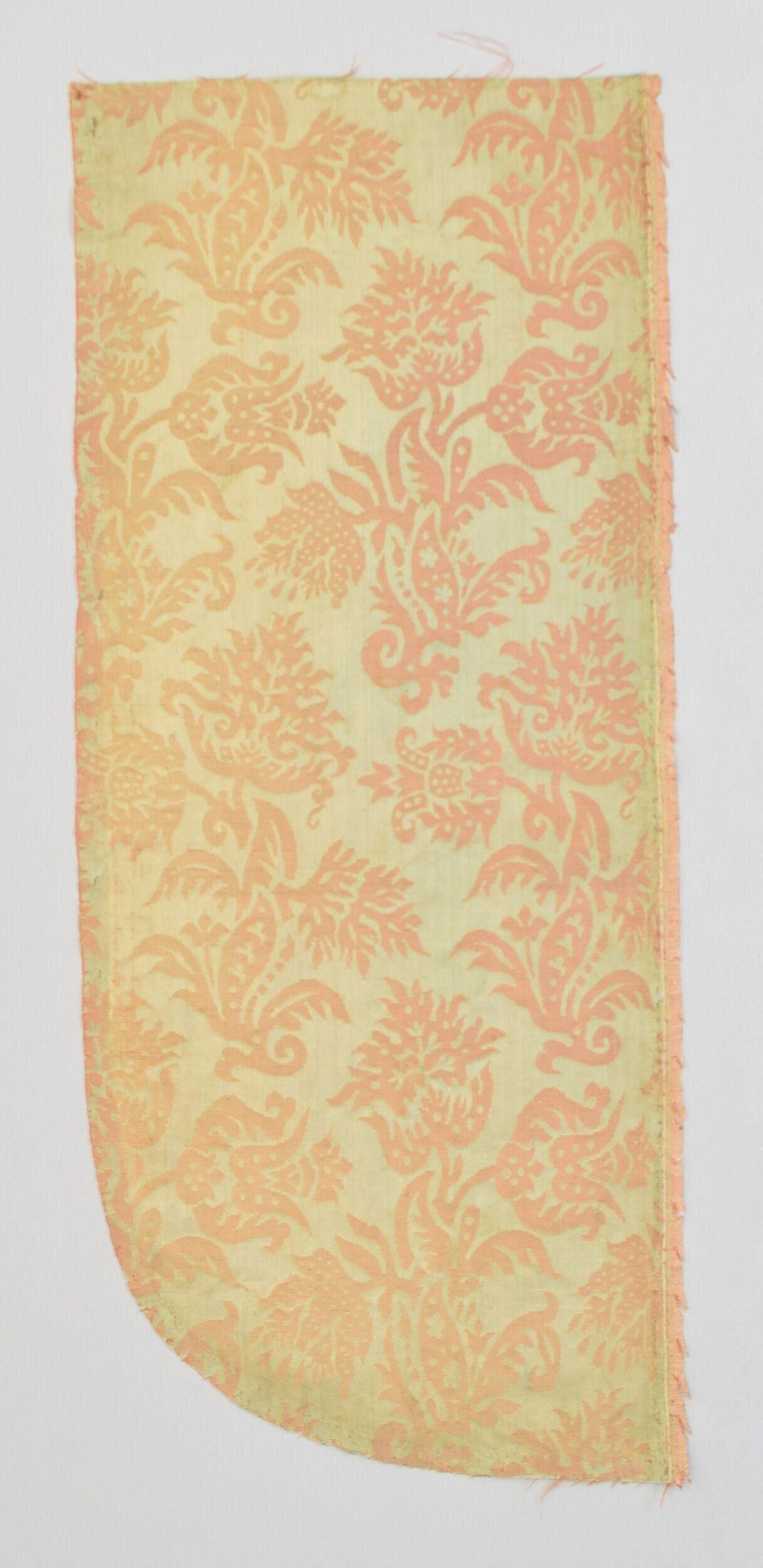
French silk damask, seventeenth century, Victoria and Albert Museum, https://collections.vam.ac.uk/item/O300024/damask/.
A Marriage for a Gentlewoman?
When Urania became a teenager, her future came into even sharper relief—particularly around the project of marriage. In a final act of paternal affection, Chetwood bequeathed in his mid-1699 will a ring worth 400-500 pieces of eight (that is, £90-£112 10s, or £15,000-£18,000 today) for Urania’s future marriage. Oddly enough, the same day, for unclear reasons, he cancelled that gift and redirected the proceeds to the poor of Dublin.[12] The same year arrived Lodington’s proposal. We can now piece together some more of the context. His rising position from merchant to consul made him think himself a good match; from Nathaniel and Jane Lodington he had heard great things about Urania, and probably that their impending return would make acting immediately the prudent choice.
So what did they say?
From Lodington’s next letter, we learn that his proposal was roundly rejected: ‘takeing ye first repuls sufficient to forbid anÿ further thoughts on that enterprize & soe shall Content mÿ selff in being less fortunate’[13]. There are a number of very sound reasons: the large age difference, the Goodwyns’ impending emigration, the fact that Urania (not to mention her father) and Lodington had never met (in his words ‘tho fortune hase been soe unkind, as never to allow mee ye happeness of being p.sonably, knowne by you’), that Goodwyn knew from experience Tripoli was both less safe and desirable than Lodington was making out, or—not least!—the several very plausible accusations of sexual misconduct against Lodington himself (including against a Greek slave and his brother’s wife).[14] Knowing that Urania’s viewpoints were respected, it is likely that this decision was also not made by Thomas alone.
We might surmise from this interchange that Urania was considered capable of attracting a far better match in England. And yet—she never did. Little enough is known about Urania after their return in mid-1700. Goodwyn remarried to a Mary Hall in 1711; in the 1720s or earlier Urania became her father’s co-investor in stocks and property in Norfolk and Westminster and his executrix in a series of court cases in the 1720s.[15] But in January 1742, Urania Goodwyn, spinster, made a will from the parish of St Ann, Westminster (what is now Soho), where she lived with her likewise unmarried cousin Love Newark and two servants, Mary and Elizabeth Polden.[16] She held annuities from the Emperor’s Loan and the South Sea Company; a variety of gilt and silver kitchenware; three diamond rings, two gold watches, ‘a man’s head’ and ‘a Coat of Arms’ both ‘set in gold’, and three Louis D’Or gold coins; and—perhaps the last reminder of her childhood in Tunis, ‘three Turkish pieces’. These more precious items went to Urania’s nephews Thomas and Hugh Naish (sons of Lucy Newark and Hugh Naish), while Mary Poulden was to receive all her clothing, linen, furniture, and remaining household goods.[17]
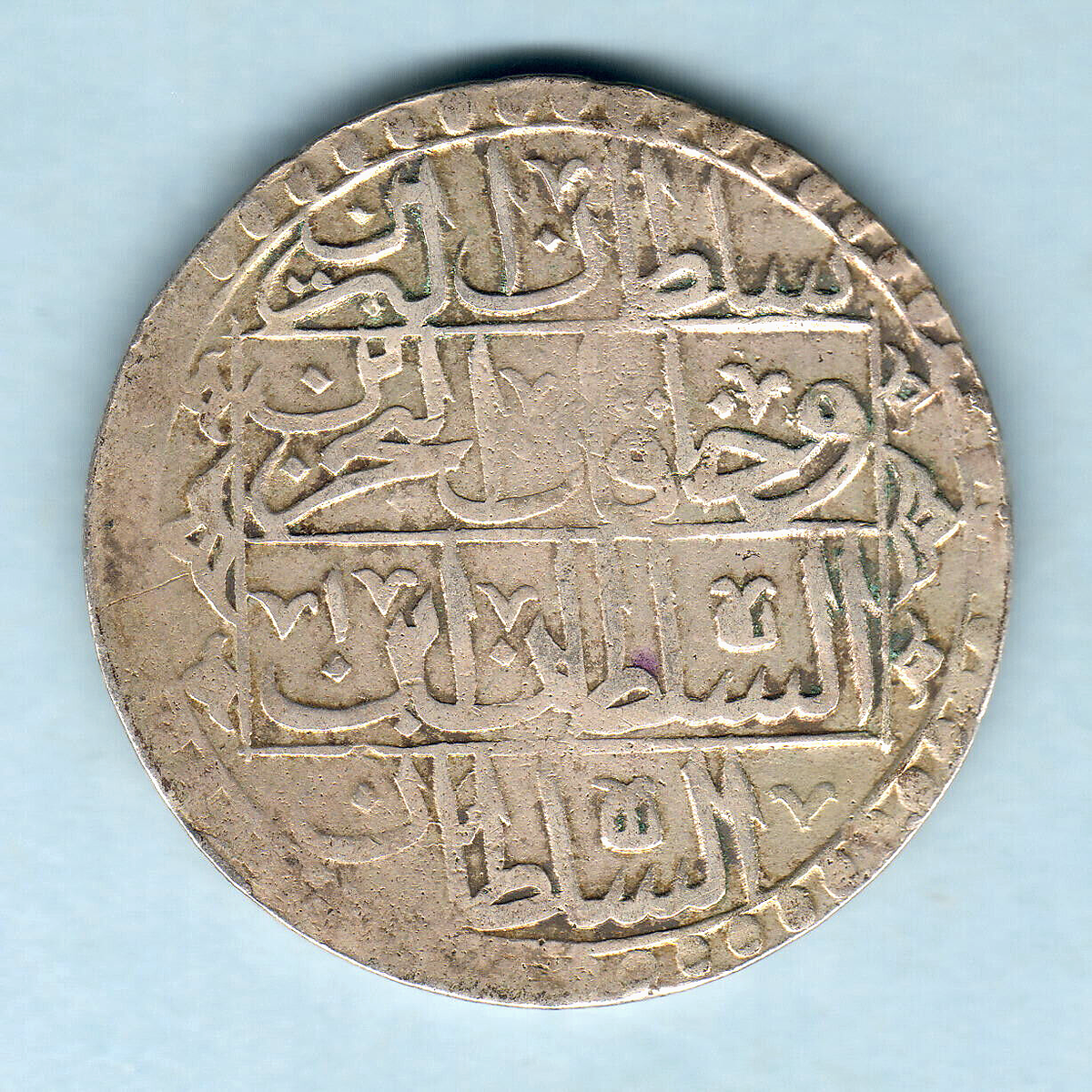
Ottoman silver akçe, eighteenth century. A common coin in Tunis alongside the local piastre and the Spanish dollar or piece of eight. https://i.ebayimg.com/images/g/z58AAeSwSldpNVi8/s-l1600.png
Conclusion
Urania’s story—of a hybridised life dislocated to a new country—has stuck with me ever since I found the clues in the archives all the way back in 2019. Think of those three 'Turkish pieces' in her will—Ottoman coins kept for over forty years after she left Tunis. Everything else in the inventory implies successful assimilation: the refined tableware, the South Sea Company annuities, the diamond rings. But those three coins sit as a counter-story: a reminder of a hybrid life not fully abandoned. Tunis-born and London-migrated, she was something the period had no ready category for—not a captive, not a convert, not an expatriate wife, but a child who simply grew up where her parents happened to be, and then had to make a life somewhere else with whatever she had carried back. The questions her story raises, about belonging and cultural memory and those forty-two sparsely documented years in Soho, are ones the archive can only gesture at. But they are worth asking—and you can follow some of the threads, along with the parallel lives of Urania’s contemporary children Deborah Bourne, Honora Baker, Molly and Richard D’Ortega, in my book.
[1] Benjamin Lodington to Thomas Goodwyn, 18 October 1699, FO 335/13/9.
[2] Sir Alexander Rigby to Thomas Goodwyn, 9 August 1695, FO 335/11/4.
[3] Nat Cutter, Britain and the Ottoman Maghreb, 1662-1712: Merchants, Consuls, and Cultural Exchange (Oxford University Press, 2026), 92-96.
[4] Cutter, Britain and the Ottoman Maghreb, 104-5, 139-41.
[5] Cutter, Britain and the Ottoman Maghreb, 89.
[6] James Chetwood to Thomas Goodwyn, 6-7 May 1697, FO 335/12/3.
[7] James Chetwood to Thomas Goodwyn, 9 September 1697, 14 November 1697, FO 335/12/4. A 1698 visit is recorded in FO 335/13/1.
[8] James Chetwood to Thomas Goodwyn, 19 March 1699, FO 335/13/11
[9] James Chetwood to Thomas Goodwyn, 24 March/3 April 1699, FO 335/13/11; Thomas Goodwyn to James Chetwood, 27 March 1699, FO 335/15/8.
[10] Lucy Newark to Urania Goodwyn, 4 May 1699, FO 335/7/6
[11] Robert Cole to Thomas Goodwyn, 12 July 1699, FO 335/13/7. She had also ‘a pair of carcalls’ and two small gold bracelets, bought a few years earlier (list of jewellery and gems by Thomas Goodwyn, 24 December 1694, FO 335/11/2).
[12] Will of James Chetwood, 4 August 1699, PROB 11/458/26.
[13] Benjamin Lodington to Thomas Goodwyn, January 1700, FO 335/14/4.
[14] See Cutter, Britain and the Ottoman Maghreb, 96, 264.
[15] Cutter, Britain and the Ottoman Maghreb, 46.
[16] Cutter, Britain and the Ottoman Maghreb, 46, 141.
[17] Will of Urania Goodwyn, January 1742, PROB 11/716/168.

